In considering diagnosis and prescription when it comes to political order, the imperative is in some sense to do something. As Karl Marx said in his Theses on Feuerbach, ‘The philosophers have only interpreted the world, in various ways; the point is to change it.’ How does one change the world, when faced with the inevitability of solitary time? The world – perhaps like (g)od, especially in the sense Spinoza intended – is unitary. Is it a single thing, as is time itself. Time is not mutable, at least for us and our current technology. There are no A-B tests on history.
One cannot but do what one does. Therefore, when we consider that in the first instance the situation in the world is disappointing for one reason or another – poverty, war, etc.; and in the second instance that it would be in some sense better if certain actions were taken, or if certain actions had been taken, where does that analysis leave us? That things …would be better if… is neither here nor there. It is not, never was, and may or may not be in the future.
One will do what one will do, because one has been led to this point of action through a sequence of contingent circumstances. That one of those circumstances may be a kind of revealing of a diagnosis, a kind of social pathology, is only relevant insofar as it is intelligible to the so-called actor, who Fortuna has provided with the means to effect some kind of suitably responsive event.
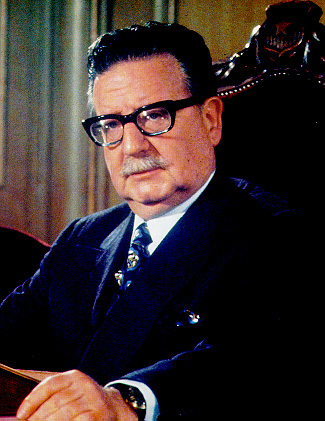
Let us take an example. Salvador Allende in Chile wins election to become President in 1971. He is in some sense a socialist, a democratic socialist, and has ideas of relieving his country’s dependence on foreign companies and governments. He implements those policies and tries to change the way Chile is run by nationalising some companies, amongst other policies.
Allende’s diagnosis was that his fellow Chileans were by and large poor, that their lot was not improving, and that the policies of the conservative government were not helping. Meanwhile, foreign countries were making a lot of money in Chile through mining and other commercial activity. He chose to stand for election, won a majority, and took power. Allende’s prescription was to run for office, and (for example) nationalise the Chilean telephone company.
Did Allende Change history? Well, you might argue that he made history by winning the election. This is true in that history is recorded that way. However, he didn’t win that election himself; the voters and the rest of the political machinery operated in such a way as to declare ultimately that Allende had won. Is it possible to conceive of a situation where Allende did not run? He had, after all, been running for twenty years, and this was his first victory. Similarly, you can make the same argument for his defeated opponent Jorge Alessandri, that it is near impossible to conceive of a situation where Alessandri had not lost. He had, after all, made many enemies from his prior presidency, too many perhaps for CIA interference to compensate for. Had Allende been running against anyone else, he would have won. Had Alessandri been running against anyone else, he would have lost. It is impossible of course to disentangle the fate of Alessandri from that of Allende, just as it is impossible to disentangle the events of Allende’s presidency from the twenty years of electioneering – and so many other countless environmental and contingent vagaries.
In any case, there remains only one history, only one timeline. Why do we need to consider alternatives? The primary reason, it seems to me, is that we need to consider cause and effect, action and reaction, an understanding that our actions have consequences, and that our choices matter.
If prescription therefore is unnecessary because things are going to happen as things are going to happen, surely diagnosis is similarly impoverished? The timeline evolves as the timeline evolves, and our bias for the present, recognising now some distinction between future and past, is merely that – bias. This maelstrom of events and objects and conjunctions and coincidences conspire to render a reality that we inhabit, and experience, and feel. Some sense of life, a search for meaning, perhaps, forces us to make some attempt at categorisation, at organisation, at order; we recognise past and future as related but different. We assign agency, cause and effect. We do science to measure more and more of the things we cannot measure, from geometry to chemistry to astrophysics. The things we cannot measure we leave to religion, and art, and poetry. Our civilisation is these days concerned with moving things from one column (art) to the other (science). Politics used to be an art, about people; now is it a science, about economics. It’s the economy, stupid, as James Carville is reputed to have said during the election of Bill Clinton in 1992.
And as Hayek said in his Nobel speech, the social sciences in particular have a lot to answer for, in that they dismiss as somehow less relevant those things that we cannot measure, taking as proof of a conjecture the evidence sourced solely from the realm of phenomena upon which some arbitrary order has been laid.
Where then lies the dialectical synthesis between the diagnosis and the prescription? Perhaps the dialectic itself has to be attacked as a false set-up, as an invalid separation of two things – past and present – that are in essence part of the same thing.
 State Legitimacy