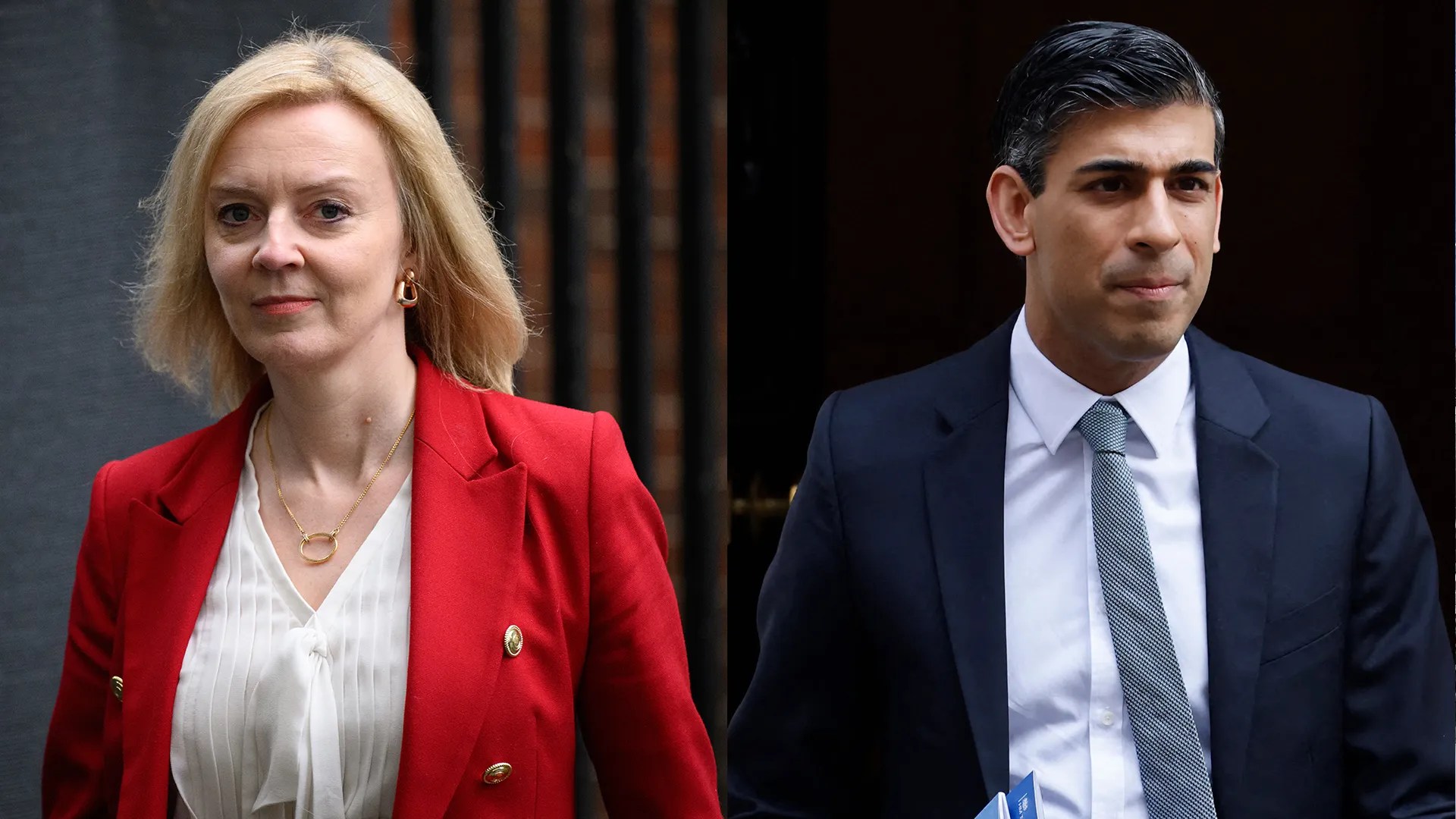
The Brits are having another Oxbridge-style debate about keeping nicotine away from children, with Sunak on the one side arguing that there’s nothing ‘unconservative’ about protecting children, while “former Prime Minister” (the title needs those quotes) Liz Truss on the other saying it’s Nanny State nonsense. This idea of ‘being conservative’ has morphed over time, but there are certain things that it retains, not least a belief in personal freedom. It’s laden with hypocrisy of course – not least that the current and “former” Prime Ministers, both Oxford graduates, are arguing about how the hoi polloi should behave.
The argument goes like this: individual freedom is sacred. The State should have as little to do with people as possible, and people should be free to make up their own minds about how they behave, save insofar as it infringes upon other people’s equal rights to so behave. That’s what it means to be a conservative. People tend to agree with the freedom bit, but when things are happening that they disagree with – like kids getting addicted to vapes that are both expensive and unhealthy (and it’s not immediately clear which of those two issues is driving this) – then something needs to be done! Hence Sunak responds ‘Behold! I have a banning law’, ever the vote-seeking populist; while Truss cries out ‘Freedom denier! First they come for your vapes, next it’s tyranny!’
The Truss argument fails once you realise that even Friedrich Hayek – the intellectual sherpa for Thatcher’s Idea of Britain™ – accepted that those of lesser capacity, including children, needed protection from the vagaries of various free markets. Where the argument also fails is in its failure to recognise the essentially aristocratic nature of Britain. The absence of a written constitution similarly facilitates the avoidance of aristocratic and patrician accountability, and a weakening of the rule of law (especially in International Law). In Plato’s Republic, Socrates argues that aristocracy – rule by the best – is the finest form of government, while the others – Timocracy (rule by the most honourable), Democracy (by the people), Oligarchy (the wealthy) and Tyranny (the tyrant) – each have flaws, though some, in particular democracy, have something to recommend them. What happens when an aristocratic structure is preserved, but the aristocrats themselves fall short of being ‘the finest’?
For Truss argue that freedom should be preserved at all costs assumes in advance that the circumstances and institutions obtain where individual rights are protected, and that genuine democracy provides the infrastructure for modern life. Socrates argues that democracies promote freedom, yes, but also equality, diversity and privacy. Given the poisonous debates on Brexit and immigration, it’s difficult to see how diversity is championed in Britain, while the levels of inequality are staggering. The long series of home office, military and police denials of other basic rights to citizens similarly questions how well supported fundamental freedoms are (I don’t really need to link to all those awful stories here, do I?). The persistence of a monarchy in a sense culturally embeds a caste system; land laws mean that almost a third of farmers are renting their land, locked in feudal relations. People across Britain comfortably accede to the idea that in some essential sense the royal family are ‘a better class of people’. Conservatism in a cultural sense (as distinct from economic) means preserving historical structures – and so this aristocratic, monarchial deference, with its designed inequality, is as much a part of the Tory future for Britain as it a part of its past.
All in all, being conservative in 2024 look more anachronistic than it has ever done. Both neoliberalism and socialism (at least in the Jeremy Corbyn sense) are each a busted flush, though the old Oxbridge arguments persist about free-market economics versus democratic socialism. Meanwhile, kids are starving, people are being evicted, and skilled workers are leaving. That election can’t come too soon.
 State Legitimacy