There are two major projects that I am driving – the book(s) project, and an ongoing investigation into the epistemic challenge of technology, if indeed such a challenge is manifest. The books (there are three), without giving too much away, revolve around the development of early twentieth century cultural theory and its intersection with science, in tandem with early Reformation cultural transformations and historical narratives. The tension between science and religion, and within systems of belief are central to both projects. In the work on technology, the concern that I have been exploring for almost ten years now, if not more, is whether AI can supplant our history and our science as a source of some kind of institution of truth. Each project explores how we know what we know, how it informs our social and political structures, and how epistemology develops – a kind of techno-episteme.
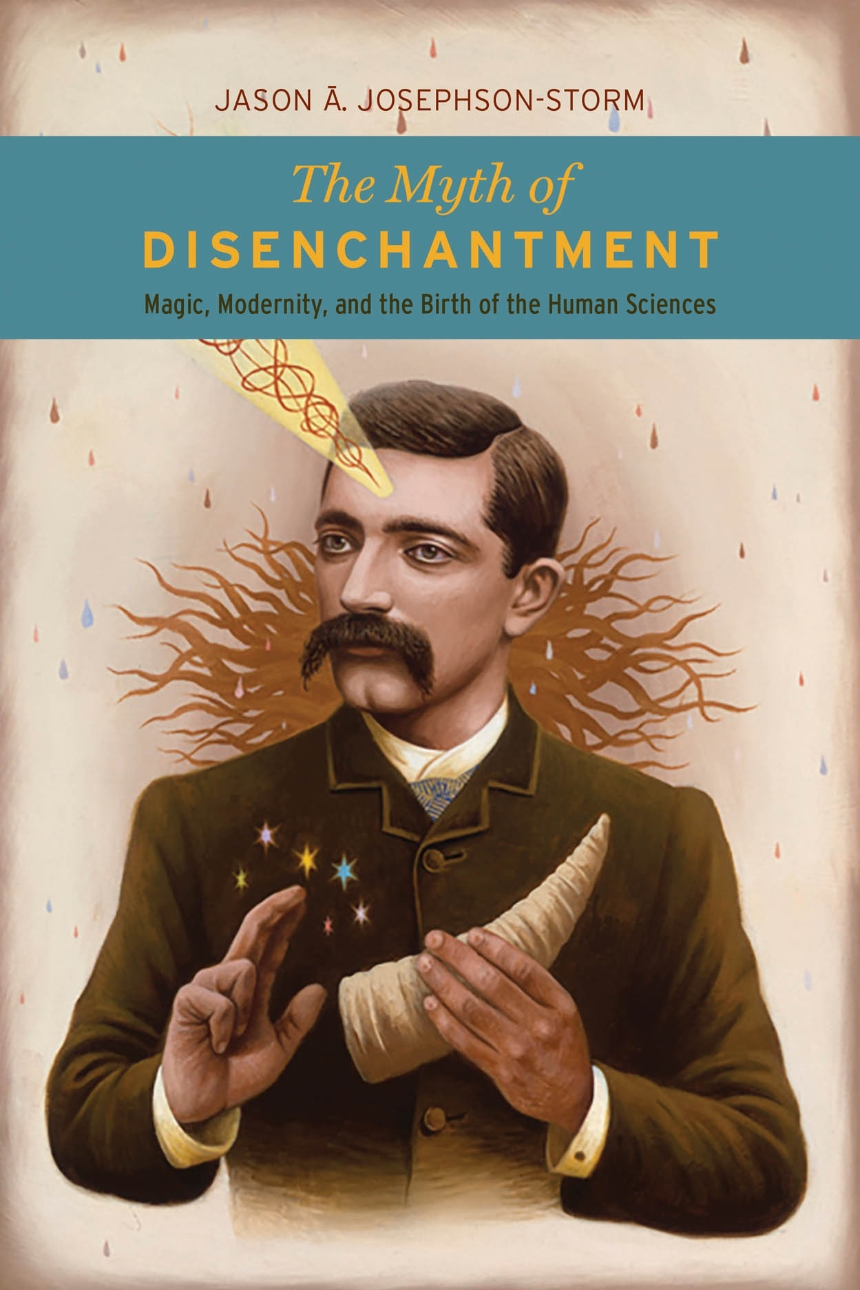
As part of that, I’ve been reading the excellent The Myth of Disenchantment: Magic, Modernity and the Birth of the Human Sciences, by Jason Josephson-Storm. Having just completed Chapter 5, The Decline of Magic, which focuses on The Golden Bough and the disenchantment narrative of James Frazer, I was taken by the late comments of Frazer in The Worship of Nature (1926), where his fundamental scepticism comes through. Through the development of the Golden Bough, Frazer had shifted from an analysis of Magic, Religion and Science as co-existing and intellectually competing interpretations of the world, to viewing them in a cultural Darwinian sense, as evolutionary, or progressive, in that order: that societies move from stone-age belief in magic through medieval religion to modern science. Now, taking one step further, Frazer suggested that this is not an entire pseudo-millenarian / end-of-history view: there may well be something beyond science.
Frazer, quoted by Josephson-Storm, argues that ‘[I]n the final analysis, magic, religion, and science are nothing but theories of thought; and as science has supplanted its predecessors, so it may hereafter be itself superseded by some more perfect hypothesis, perhaps by some totally different way of looking at the phenomena — of registering the shadows on the screen.’ (at p. 146). Josephson-Storm assigns the ‘shadows’ reference to Frazer’s Neoplatonism, with some justification: the cave allegory seems appropriate here, for this is an epistemological position. Frazer borders on postmodern nihilism as he resiles from any suggestion of an absolute truth, which simultaneously offers him a defence of his work against allegations of imperialist boosterism. Elsewhere in the book, Josephson-Storm refers to the context within which Frazer operated as one of ‘urban, educated English Protestants’ maintaining a grip on the cultural narrative – certainly on imperial anthropology but also on more localised assessment of folklore.
That Frazer’s position is an epistemological one means that he sees magic, religion, and science as structures of reality, maybe what Foucault would refer to as epistemes – essential ‘rules of formation’ that govern what constitutes legitimate forms of knowledge for a particular cultural period, or what Deleuze and Guattari called ontologies. What then could lie beyond science?
Given my line of research, it seemed natural to me to focus on the word screens, rather than shadows. What follows is technology; artificial intelligence; mediation. It seems interesting to juxtapose technology onto that list – magic, religion, science, technology – and recognise that while technology – techne – has been around for as long as man has used tools, information technology, and specifically very large scale AI appears to have crossed a threshold of significance, in terms of its capacity for knowing, remembering, predicting and communicating, each in some independent or autonomous way. In understanding our episteme, then, the medium it seems is indeed the message, as Marshall McLuhan noted.
Josephson-Storm’s primary mission appears to be to deconstruct the conventional narrative of science, methodically and historically. In one sense, the post-modern demolition of historical narrative itself is more or less complete, but there persists a strange, lingering aversion to extending that critique to epistemology. This failure appears analogous the endless excuses as to why modern physics refuses to engage head on with quantum theory, and the even more fundamental (Humean) shortcomings of the scientific method. Ultimately, science seems to work, in a way, though the failures of modern science to achieve meaningful change in inequality, global poverty, and life expectancy cannot be easily explained away. The book is compelling, with an incredibly broad sweep, and meticulous research.
I’ve found myself tripping over words that I thought I understood, but that overlap with one another, like magic, superstition, witchcraft, and the like. To that end I’ve assembled here a simple set of definitions mostly from Google that I can come back to. In particular, the definition of the miracle is worth exploring as it is more central to the essence of Catholicism than I had previously thought.
Folklore: the traditional beliefs, customs, and stories of a community, passed through the generations by word of mouth.
Magic: the power of apparently influencing events by using mysterious or supernatural forces. (Kurt Vonnegut: science is magic that works (Cat’s Cradle); Arthur C. Clarke: any sufficiently advanced technology is indistinguishable from magic)
Witchcraft: the practice of magic, especially for evil purposes; the use of spells.
Spell: a form of words used as a magical charm or incantation.
Supernatural: attributed to some force beyond scientific understanding or the laws of nature.
Superstition: excessively credulous belief in and reverence for the supernatural.
Religion: the belief in and worship of a superhuman power or powers, especially a God or gods.
Miracle: an extraordinary and welcome event that is not explicable by natural or scientific laws and is therefore attributed to a divine agency.
Nature: the phenomena of the physical world collectively, including plants, animals, the landscape, and other features and products of the earth, as opposed to humans or human creations.
Science: the systematic study of the structure and behaviour of the physical and natural world through observation, experimentation, and the testing of theories against the evidence obtained.
Technology: the application of scientific knowledge for practical purposes, especially in industry.
Physics: the branch of science concerned with the nature and properties of matter and energy. The subject matter of physics includes mechanics, heat, light and other radiation, sound, electricity, magnetism, and the structure of atoms.
Chemistry: the branch of science concerned with the substances of which matter is composed, the investigation of their properties and reactions, and the use of such reactions to form new substances.
Biology: the study of living organisms, divided into many specialized fields that cover their morphology, physiology, anatomy, behaviour, origin, and distribution.
Ontology: 1. the branch of metaphysics dealing with the nature of being. 2. a set of concepts and categories in a subject area or domain that shows their properties and the relations between them.
Epistemology: the theory of knowledge, especially with regard to its methods, validity, and scope, and the distinction between justified belief and opinion.
 State Legitimacy