Tom Chivers in The Observer laments the demise of religion for its impact on social cohesion – and challenges that secularism needs to replace it with something else that works. I think that’s exactly what the Internet is for – new communities, new communications, new associations. The Internet, in that social sense, is the new religion.
Author: anthonybehan
Researching state legitimacy, AI, identity, critical theory, and how technology changes personal identity and the nation state. One wife, three dogs, six guitars, and a seldom used trombone. Work for IBM but this is completely independent of that.
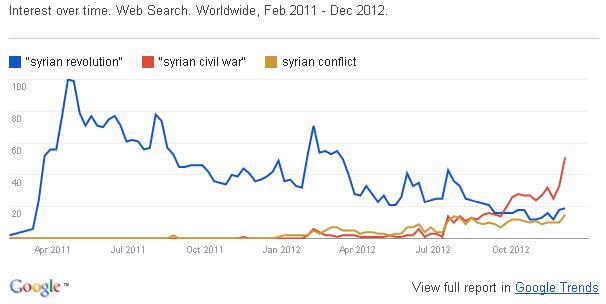
State Legitimacy is an amorphous thing. It’s difficult to measure, difficult to assert, and relative. Not only is the legitimacy of the state relative to other states, but it is relative across other dimensions too – relative to its citizens, or subjects, relative to its power or to the effectiveness of its power (an admittedly cyclical compare), and relative to the context of its actions. In other words, it’s tough to pin down. If we think of it another way, if we could measure state legitimacy, and we could similarly measure state illegitimacy, or the extent to which a state is failed, what would be the point at which we recognise one polarity from the other?
Continue reading “Nebulous Concepts: Revolution becomes Civil War”
 I stumbled upon a most excellent article called The Meaning and Measurement of State Legitimacy by Dr Bruce Gilley, formerly of Princeton University and now at Portland State. One of the most useful pieces of the article is the definition of State Legitimacy, which from my first reading appears to be interchangeable with the term political legitimacy. Gilley explores the subjects, objects and sub-types of legitimacy. Gilley then proceeds to do essentially what I have been discussing – a ‘strategy to achieve replicable cross-national measurements of legitimacy is then outlined and implemented, including a discussion of data sources and three alternative aggregation methods.’ He also has a book (right), which I’ve ordered.
 While globalization generally has an impact on the role and nature of the State, there are specific components of globalization – including communications technology and the impact on community, frequency and immediacy of travel and the impact on territorial integrity – that should each be dealt with independently. One of those is the development of supranational institutions, and the extent to which they may have an impact on state legitimacy, and/or legitimacy. This can be a very legalistic argument, as it concerns itself with Public International Law, but it is a necessary foundational consideration for this part of the State Legitimacy Economy.
Continue reading “Do Supranational Organisations Compromise State Legitimacy?”
In many ways, the question of whether State Legitimacy is being eroded is a question about the future of the Nation State. This is not a new question, and many writers have had various points of view (like Bobbitt and his Market State, for example). Many writers go back, instead of going forward – I’ve recently been reading Jared Diamond’s Guns, Germs and Steel; Acemoglu and Robinson’s Why Nations Fail; and Fukuyama’s The Origins of Political Order in some way all address the history of civilisation, and the state and its attendant social order. There’s usually an epilogue or final chapter on future vision, or what this means, but generally speaking these books and their writers offer a historical framework for thinking through how States, and civilisations, evolve. Continue reading “The Competitors for State Legitimacy”
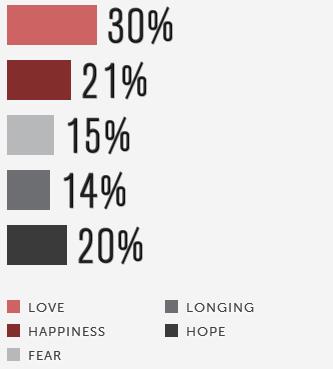 Sebastian Faulks in the Guardian helps pull together a global visualisation (well, Global to the extent that the Globe is represented by Twitter) of sentiment. Call me an old cynic, but I suspect someone in his publisher’s publicity team was probably more responsible than the grand old man himself. Nevertheless, it stirs some interesting dirt from the bottom of our social media puddle.
Continue reading “Feeling, Emotion, Attachment, and Twitter”
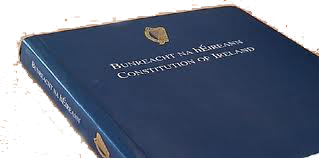 I attended the inaugural meeting of The Constitution Project last night, a new academic research unit at UCC, whose meetings are open to the public. Groups and projects on The Irish Constitution and Irish Constitutional Law seem to be springing up in many places, some by the lunatic fringe, some deep in sheltered academia, and others – like this, it seems – trying to find a balance between the two. It was a well organised, well chaired event, with a good range of subjects within a reasonably tight framework. Kicking things off was the subject of the Referendum Process, with Mr Justice Gerard Hogan speaking on the history of referendums, or more accurately the amendment structure under the 1922 constitution and why it was bad. He was followed by Mr Justice Bryan McMahon (who taught me Tort in Galway 22 years ago) who had been chairman of the Referendum Commission in the two most recent referendums, speaking of how the commission works – a rare and insightful discussion. Dr Theresa Reidy then outlined some opinion poll based research into why people voted as they did in the Oireachtas Inquiries referendum, which was very interesting, particularly in the context of Mr Justice McMahon’s comments. And finally Dr Maria Cahill revisited the Crotty decision, one that began to get at why we have so many referendums (not just in EU cases).
 I’ve not read much of Popper, a failing I’m looking to rectify soon. However, one snippit has intrigued me – his assertion that if we can predict a solar eclipse, then we should be able to predict revolutions. Saying that, I’m not entirely sure if it was an assertion (“…we should be…”) or a question (“…should we be…”). Nevertheless, our excess of instrumentation today through the integrated digital tooling of everything means that we can measure more than ever before. With social media, an appropriate big data infrastructure with cutting edge sentiment analytics should be able to measure the pulse of a people. That’s an experiment I’d like to set up some day, and hopefully I’ll get the time to do it.

Ecuador is tonight alleging that the UK authorities have threatened to arrest Julian Assange inside its embassy in London. Mr Assange, Wikileaks founder and darling of the far left (and some moderates too) has essentially skipped bail following the rejection of his appeal against extradition to Sweden to stand trial for sexual assault. It is of course part of a bizarre super-story that has been running for two years now, starting with the publication of diplomatic cables between and about governments, the imprisonment and alleged torture of US Marine Bradley Manning, who is accused of leaking the cables in the first place. There is no small irony in the threat from British authorities to cast aside one pillar of diplomacy – the sanctity and sovereignty of the embassy – in order to prosecute the casting aside of another – the leaking of diplomatic cables.

State Legitimacy is a big topic. Yesterday, the good people at the University acceded to my request for external reader status, giving me access to the University subscriptions to online journals. I didn’t have a ready made list of journals to download (remote access is unfortunately not available to “external readers”) so I sat down and began searching on some of the keywords. “State Legitimacy” was first; then “Nation State”. Lots of results, lots of articles, including one particularly interesting piece on Cuba’s efforts to bolster State Legitimacy based on sports. As the abstract explains,
A crucial element of the legitimating discourse of the Cuban state, domestically and internationally, has been the relative success of its sports teams in international competition. As symbols of the strength of the state and one of the few remaining “successes” of the Revolution, Cuban sports performances remain vital symbolic capital for current and future administrations.
 State Legitimacy