Author: anthonybehan

Researching state legitimacy, AI, identity, critical theory, and how technology changes personal identity and the nation state. One wife, three dogs, six guitars, and a seldom used trombone. Work for IBM but this is completely independent of that.

The Lost Soul of Europe

Clyfford Still's 1944-N No. 2
Clyfford Still’s 1944-N No. 2. For Still, art was dead in the aftermath of World War II, for it was based on European ‘dogma, authority, tradition. The totalitarian hegemony of this tradition I despise, its presumptions I reject’ (MOMA)

What has happened to Europe? What of our glorious post-war project to bring together our cultured peoples after centuries of war, that brave experiment not merely in statecraft, but in post-state statecraft, to redefine government, and seize peace to our hearts? It has persevered and grown for over sixty years, launching exuberantly into the new Millennium with the Euro, but now she finds herself beset on all sides by vast forces including geopolitics, security, technology and global finance. Worst of all, Europe seems to have lost its soul. Not merely its raison d’etre, but its spirit, its ambition. What is missing?

Continue reading “The Lost Soul of Europe”

Deus Ex Machina: Schmitt’s Political Theology

The concept of political theology describes the theological genealogy of political legitimacy, the validation or justification of power over others in the equitable establishment of order, and the protection of freedom. As an idea, it is associated with Carl Schmitt, one of what Yvonne Stewart called ‘Hitler’s Philosophers’, an intellectual inheritance tainted by his association with and support for the Nazi party. Nevertheless, as an abstract concept, political theology helps us to deconstruct the nature of power, and trace its origins in legitimacy and the development of political order. Because as we have seen technology embeds politics, particularly and more aggressively as automation and AI proliferate, it has become important to consider whether technology itself has some divine provenance in its human construction.

While Schmitt was immediately despondent, and wrote on the night of Hitler’s accession to power in 1933 ‘[i]t is a terribly cold night’, in the words of Stewart ‘[h]e relegated democracy to a burnt memory, and, like a dark phoenix from the ashes, he allowed tyranny to rise: authoritative, powerful and legitimate.’ (p. 103) It is impossible to detach his legacy from Nazi Germany, and it is necessary to read his work carefully in anticipation of the ideology that it would ultimately support. In the 1934 version of his Political Theology, for example, a work with which this post is substantially concerned, he quotes Emmanuel Sieyès, saying ‘The people are always virtuous. In whatever manner a nation expresses its wishes, it is enough that it wishes; all forms are good but its will is always the supreme law.’ (p. 48) Still, there are sufficient constructions in the work that allow us to consider a coherent, structured theological etymology or structure for politics and the political.

Continue reading “Deus Ex Machina: Schmitt’s Political Theology”

The Genealogical Method for Independent Research

Cheese and Wine
Who actually decides what a wine or a cheese is called? Where do they acquire their authority?

The genealogical method, where an idea is traced back to its roots as one would map a family tree, began in the nineteenth century substantially, it seems, with Nietzsche and in particular On the Genealogy of Morals. It is in one sense an attempt to escape the trappings of history, to understand the lineage of ideas in the context of their time. In another, it is an attempt to loose ourselves from the alienating influences of modernity, stripping ourselves of prejudice and ‘education’. For the independent researcher, it appears to me to be an essential tool in understanding things, and in plotting a research agenda.

Continue reading “The Genealogical Method for Independent Research”

Reflections on Blackwater: Technological Theologies, Autistic Robots, and Chivalric Order

order-now
Order is something we take for granted. That’s the mistake, the grand error of modernity.

In his 1966 work The Order of Things, Michel Foucault describes in his preface a passage from Borges to establish his objective. Quoting Borges, who in turn refers to ‘a certain Chinese encyclopaedia’, the section describes a classification of animals as being ‘divided into: (a) belonging to the Emperor, (b) embalmed, (c) tame, (d) sucking pigs, (e) sirens, (f) fabulous, (g) stray dogs, (h) included in the present classification, (i) frenzied, (j) innumerable, (k) drawn with a very fine camelhair brush, (l) et cetera, (m) having just broken the water pitcher, (n) that from a long way off look like flies’. In a later lecture recalled by Laurie Taylor, Foucault lambasted the impulse to capture and mount every butterfly in a genus and lay them out on a table, to highlight minute differences in form and colour, as if trying to solve God’s puzzle. Continue reading “Reflections on Blackwater: Technological Theologies, Autistic Robots, and Chivalric Order”

Economy and Society Summer School 2018: Synopsis

Summer School
The Ruins of Bridgetown Priory, a fitting location for a provocative lecture during the 2018 Economy and Society Summer School

The fifth Economy and Society Summer School this week was an immersion in critique, ecology and theology, and this is a quick summary. Held in the wonderful surroundings of Blackwater Castle, and adorned in splendid sunlight for the duration, my own interests in politics and technology found good company and themes that illuminated my research. Organised by Dr Tom Boland and Dr Ray Griffin, it is becoming an important resource for students of sociology and culture in Ireland and beyond. While for me there are new avenues and new subjects to investigate, it has nevertheless begun to reveal a direction for a more extended research. Continue reading “Economy and Society Summer School 2018: Synopsis”

Back and Forth: State Legitimacy, AI and Death

In the Distance
If we are to make progress, we need to know where we’re going. Does an AI know where it’s going?

In 2012, I began looking at State Legitimacy as a political entity under attack from globalisation and technology. At its core, my thesis was that the nation state was being re-cast in new dimensions, beyond geography and ethnicity, into brands, global culture, and digital communications. This was a more intellectual evolution, beyond the physical, into deeper concepts of identity. The possibility of deviance, of what Foucault or Zizek might call perversions, presented an opportunity for reduced anxieties and improved conditions for all of us.

Continue reading “Back and Forth: State Legitimacy, AI and Death”

Postcolonial Guilt, Revisionism, and the Idea of Progress

Screen Shot 2018-02-18 at 23.03.54
Reg (John Cleese), the leader of the People’s Front of Judea, implores his party: “What have the Romans ever done for us?” – from Monty Python’s Life of Brian, 1979.

Monty Python’s Life of Brian is a delightful re-telling of the story of Jesus in a secular and historical context, finding its humour in the conflict between orthodox and invariably religious interpretations of the time, and a more ‘enlightened’ understanding, based on archaeology and academic research. As it wends its way through its telling of life in a Roman colony, the real politique is surfaced in the resistance movement the People’s Front of Judea (PFJ). During one of their serious and clearly well intentioned meetings, the leader Reg berates the Romans for their oppression of the poor Galileans, asking in a fit of rhetorical pique ‘What have the Romans ever done for us?’ One lonely voice suggests ‘the aqueduct’, which Reg grudgingly concedes. Another suggests ‘sanitation’. Several others venture still more technologies, which Reg attempts to summarise thus: ‘All right, but apart from the aqueduct, sanitation, the medicine, education, wine, public order, irrigation, roads, a fresh water system, and public health, what have the Romans ever done for us?’

Continue reading “Postcolonial Guilt, Revisionism, and the Idea of Progress”

Progress and Technology

Heidegger_1955
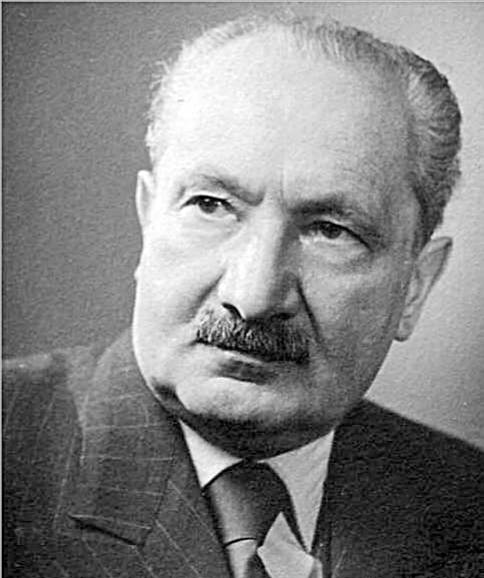
Martin Heidegger: We talk as if humans are actually in charge of things, but we’re not.

Do you know what progress means? Do you know what technology is? Many elements of cultural structure have been so consistent and unchallenged now for so many years that we may have landed in a kind of intellectual stupor. Our self-awareness has dissipated, and our alienation has become so complete that we have almost become meta-brands, brands of brands, images of images, pictures of pictures. Our pandemic mimesis denies innovation and inspiration, and only increases the penalty for deviance, or perversion. Self-knowledge has become a curse, something denies us membership of society, leading us to post-truth, and ‘fake news’.

Continue reading “Progress and Technology”

Beautiful Ideas Which Kill: Accelerationism, Futurism and Bewilderment

futurist soccer player
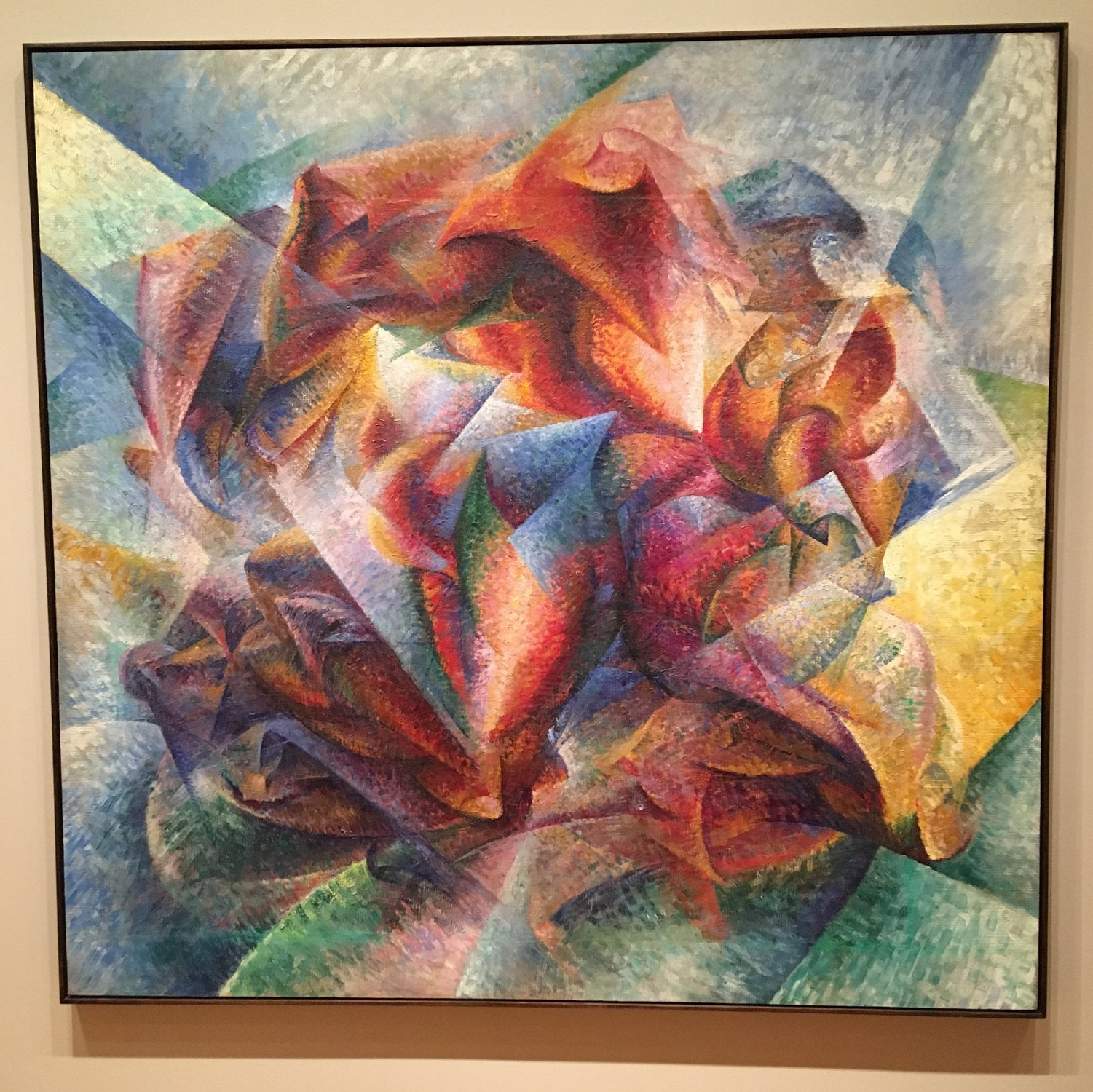
Umberto Boccioni’s Dynamism of a Soccer Player, 1913 (MOMA). Saw this on my visit in December 2017, it’s a provocative piece.

In trying to construct a progressive, positive view of the future, and design political structures that facilitate such outcomes, there are many ideas. These are the ideas of political philosophy, but they are also the ideas of sociology, economics, psychology, art and literature. When we think of writers like Karl Marx, Ayn Rand, Sigmund Freud, James Joyce – all of them could in some sense be considered to have made significant contributions in several of those fields. My own attempts to understand State Legitimacy, how the state’s claim to legitimacy can be established and maintained, is in truth a combination of those things as well. Ultimately, all of these pursuits fall back on critical theory: that field of study that attempts to understand who we are as peoples, as cultures. The Italian Futurists, from the first half of the twentieth century, and the (new) accelerationists, from the first fifteen or so years of the twenty-first century, each had a vision. And each was in some ways nasty.

Continue reading “Beautiful Ideas Which Kill: Accelerationism, Futurism and Bewilderment”

Sports: Politics by Other Means

Kim Jong Un
Kim Jong-Un has suggested that a North Korean delegation participate in the Winter Olympics in South Korea, heralding a potential thaw in relations. Photograph: Jung Yeon-Je/AFP/Getty Images

Carl von Clausewitz, a Prussian military strategist who lived through the French Revolution, wrote in his unfinished book On War that ‘war is the continuation of politics by other means’. It is of course something of a trite aphorism, and hides a considerable amount of theory and philosophy. Yet as with all good aphorisms, it reveals something important: in this case, that the seeming differences between politics and war are not so significant as we had thought. Politics is about two sides negotiating the distribution of resources, sometimes along ideological lines, sometimes along economic lines; war is not all that different, save insofar as the rule of law is suspended, such as it may have existed before the outbreak of hostilities. Increasingly, we see sporting theatre being usurped for the purposes of political metaphor. The symbolism, and the language, is a kind of double speak that would be shocking in any other context, and useful for democracies, who don’t tend to actually fight each otherContinue reading “Sports: Politics by Other Means”