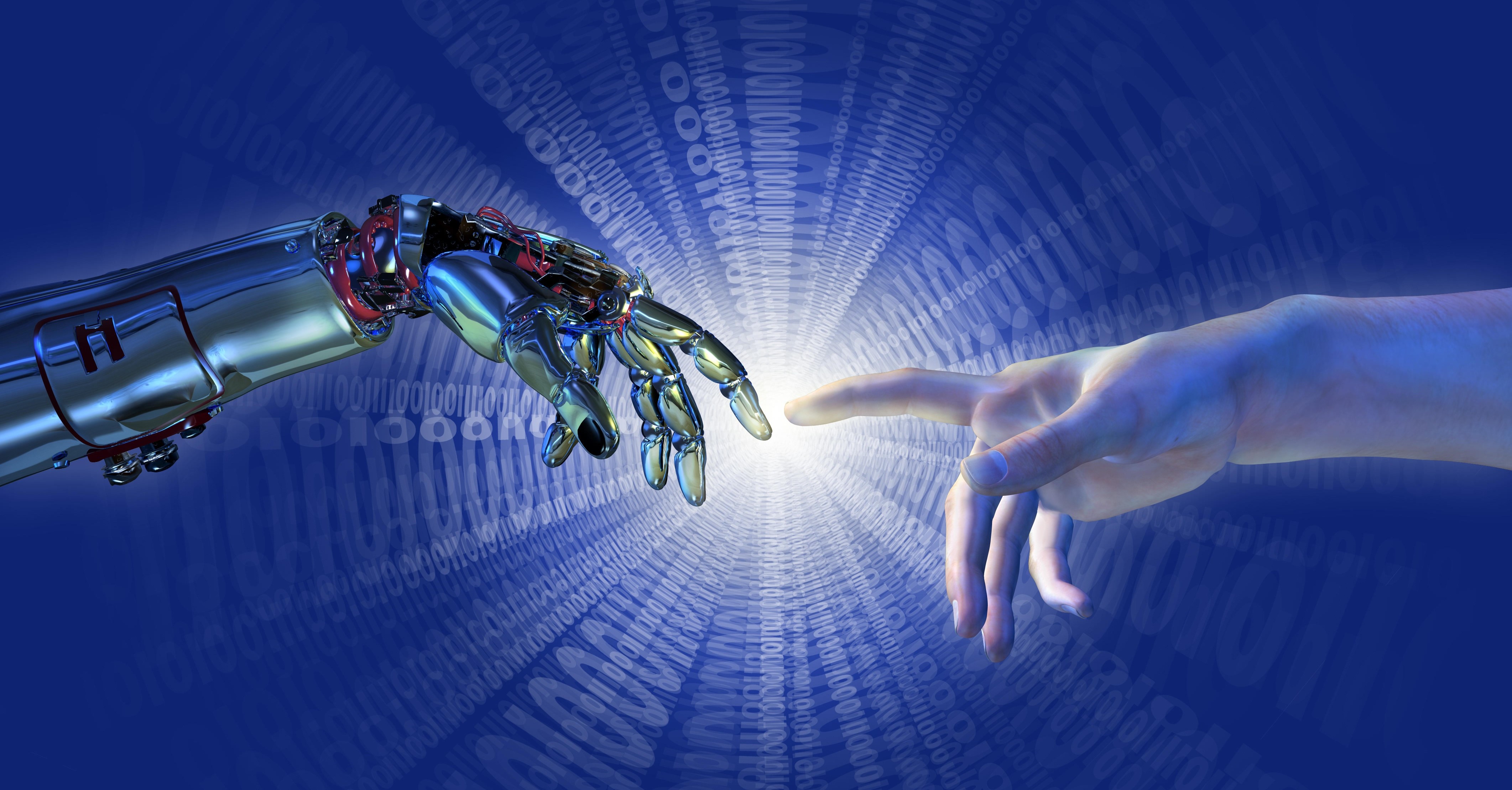
There are practical, ethical and theological challenges for religion posed by technology and AI. But what if the technology is actually becoming theological in itself?
AI poses several challenges for the religions of the world, from theological interpretations of intelligence, to ‘natural’ order, and moral authority. Southern Baptists released a set of principles last week, after an extended period of research, which appear generally sensible – AI is a gift, it reflects our own morality, must be designed carefully, and so forth. Privacy is important; work is too (we shouldn’t become idlers); and (predictably) robot sex is verboten. Surprisingly perhaps, lethal force in war is ok, so long as it is subject to review, and human agents are responsible for what the machines do: who those agents specifically are is a more thorny issue that’s side-stepped.
Tomorrow I’m going to visit Las Meninas at the Prado in Madrid, and I hope to learn something about how we are designing AI machines. How can a painting from 1656 and a technology from the twenty-first century have anything in common? Well, in a sense, both address the problem of subjective and objective reality, perspectives on the world and on memory. Diego Velazquez would have been an outstanding AI ethicist!
I finally did the TEDx talk at Ballyroan Library a few weeks ago, and the video has just been published. As I’ve considered the impact of technology on politics generally, and AI on society more specifically, it seems to me that the most significant impact is on meaning, and understanding, on our systems of knowledge and epistemology. This crystallised somewhat in the talk. It was necessary for the format to simplify the ideas somewhat. I think at least in part that worked.
Later this week I’m speaking to the UCC conference on Eco-cosmology, Sustainability and a Spirit of Resilience, on the subject of ‘Machine Generated Illusions of Intimacy’, about the challenges of modernity and computational epistemology. Here’s a sneak peak.
Order is something we take for granted. That’s the mistake, the grand error of modernity.
In his 1966 work The Order of Things, Michel Foucault describes in his preface a passage from Borges to establish his objective. Quoting Borges, who in turn refers to ‘a certain Chinese encyclopaedia’, the section describes a classification of animals as being ‘divided into: (a) belonging to the Emperor, (b) embalmed, (c) tame, (d) sucking pigs, (e) sirens, (f) fabulous, (g) stray dogs, (h) included in the present classification, (i) frenzied, (j) innumerable, (k) drawn with a very fine camelhair brush, (l) et cetera, (m) having just broken the water pitcher, (n) that from a long way off look like flies’. In a later lecture recalled by Laurie Taylor, Foucault lambasted the impulse to capture and mount every butterfly in a genus and lay them out on a table, to highlight minute differences in form and colour, as if trying to solve God’s puzzle. Continue reading “Reflections on Blackwater: Technological Theologies, Autistic Robots, and Chivalric Order”→
If we are to make progress, we need to know where we’re going. Does an AI know where it’s going?
In 2012, I began looking at State Legitimacy as a political entity under attack from globalisation and technology. At its core, my thesis was that the nation state was being re-cast in new dimensions, beyond geography and ethnicity, into brands, global culture, and digital communications. This was a more intellectual evolution, beyond the physical, into deeper concepts of identity. The possibility of deviance, of what Foucault or Zizek might call perversions, presented an opportunity for reduced anxieties and improved conditions for all of us.
Cate Blanchett’s Galadriel from the Lord of The Rings: The Fellowship of the Ring (Dir. Peter Jackson, 2001)
On the day when Apple are supposed to be launching a new iPhone with facial scanning capability, the Guardian has delightfully timed a piece warning of the dangers of the technology. Its functions potentially extend to predicting sexual orientation, political disposition, or nefarious intent. What secrets can remain in the face of this extraordinary power! Indeed, it’s two years ago since I heard Martin Geddes talking about people continuing to wear face masks in Hong Kong not because of the smog, but to avoid facial scanning technologies deployed by an overbearing security apparatus. There’s no hiding from the data, no forgetting.
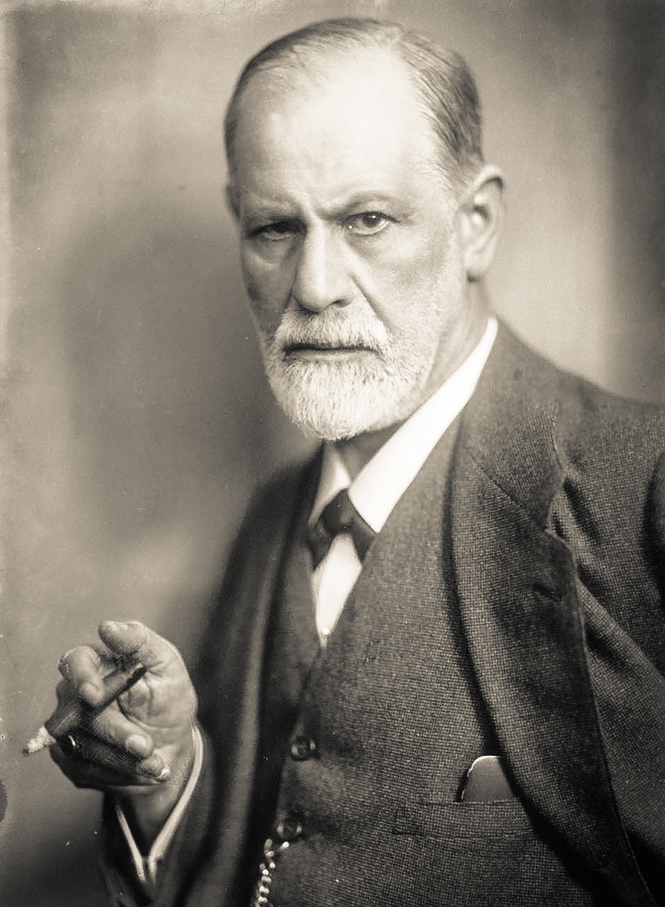
Freud had a beard, but not a hipster one. His analysis of the human condition allies with that of Marx and Nietzsche; it’s bleak.
Iván Szelényi’s course on the Foundations of Modern Social Theory is a fascinating trip through some key thinkers, from political philosophers to economists, psychologists and more broadly based social scientists. If anything, perhaps, it shows how blurred the lines are between the disciplines; linking Marx, Nietzsche, Freud and Weber to me at least was not clear: Marx was either a political scientist or an economist; Nietzsche was an existentialist philosopher; Freud was a psychologist; and Weber a sociologist. Where they coalesce, Szelényi suggests, is that they are all critical theorists. They are concerned with consciousness, with what is in the mind. Giving voice to their common purpose, he said they are suggesting that ‘[w]hat is in your mind is not necessarily what you think it is. Let’s subject your consciousness to critical scrutiny.’ His heavily accented presentation is both compelling and dramatic, and the course is to be recommended, as is the Open Yale program in general. A fabulous educational resource.
In an almost throwaway comment towards the end of his lecture on Freud, Szelényi suggests that Freud saw civilisation itself as a technology. To begin with, nature and the world is the source of our unhappiness – our discontent – and therefore we seek to assert control over it. This is something that reflects Lewis Mumford (our system that ‘…makes control over physical nature, ultimately control over man himself, the chief purpose of existence’), Murray Bookchin’s ecological worldview, and more recently the laments of Timothy Morton, Ian Bogost and the Object Oriented Ontologists – more on them later. This man versus nature battle, or subject versus object if you prefer, yielded for Freud the civilisation with which we are possessed, one bent on world domination, so to speak. Our system of social relations, our politics, is designed to extend more and more control over the world, and over mankind itself. Our civilisation is a technology, a machine, that is designed towards that end, designed to relieve us of the pain and frustration that nature inflicts upon us, up to and including mortality itself. Morton suggests that we are in fact already governed by what is effectively a primitive Artificial Intelligence, that of industrial capitalism.
There has been much written in recent times about post-truth politics, and much associated naval gazing as commentators, analysts and politicians themselves have tried to understand how to deal with all this. Leave campaigners in the UK promised £350m a week for the NHS; Donald Trump still thinks he opposed the war in Iraq; and Vladimir Putin claimed no involvement with the war in Ukraine. Populism, reactionism, anti-intellectualism – call it what you will, it’s certainly got currency.
Speaking of currency, the pound has taken a pounding since the Brexit vote, and overnight trading on the 6th-7th October witnessed a flash crash that traders have struggled to explain. David Bloom at HSBC put it that the pound had become the de facto opposition in Britain. ‘Sterling,’ he said, ‘has become a structural and political currency.’ I’d go further than that. It’s the algorithms providing the opposition. The algorithms governing the trading desks even scrape news feeds to see potentially influential stories (one commentator suggested that comments from Francois Hollande on the Brexit negotiations may have triggered the ‘flash crash’). They sense and learn, and respond, constantly scoring and valuing political decisions and the smallest market moves.
The algorithms then form their own truth. This isn’t post-truth politics, it’s absolute truth. And that is potentially a whole lot worse.
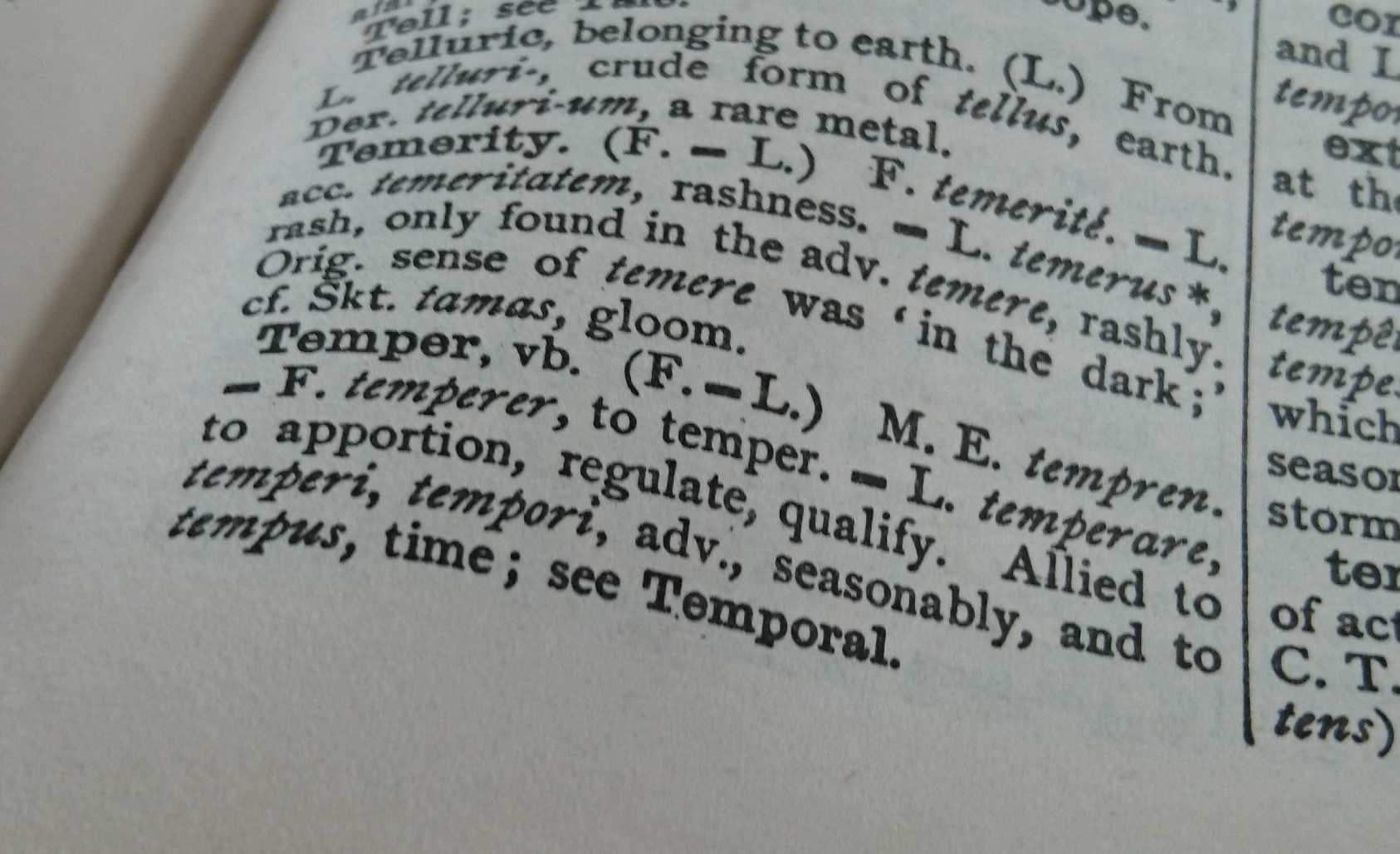
Temper – Tempus – Temporal: Machines are clocks, but they have no temper.
I had the pleasure this week of addressing the Royal Irish Academy on the subject of Digital Citizenship, which, rather than addressing the narrow construct of person-state relationship, instead took in a broad sweep of life in the digital world. Part of a series themed around the constitution, it focused on issues of growing up a teenager in the digital world, data protection (there were a lot of lawyers in the room, not least my fellow presenter Oisín Tobin of Mason Hayes & Curran), privacy, artificial intelligence and the politics of all that. In two hours, it was a hurried skip across disciplines and dystopias, which illustrated in equal measure the interest and enthusiasm people have for addressing the issue (there was barely a seat left in the hall), and the strange paucity (it seems to me, at least) of opportunities that there are to pursue in particular the ethical, policy, and political implications of our digital lives. Convened by Dr John Morrison, the Academy Chair of the Ethical, Political, Legal and Philsophical Committee, and expertly chaired by Dr Noreen O’Carroll, perhaps this is the beginning of an attempt to address that.




 State Legitimacy