If we are to make progress, we need to know where we’re going. Does an AI know where it’s going?
In 2012, I began looking at State Legitimacy as a political entity under attack from globalisation and technology. At its core, my thesis was that the nation state was being re-cast in new dimensions, beyond geography and ethnicity, into brands, global culture, and digital communications. This was a more intellectual evolution, beyond the physical, into deeper concepts of identity. The possibility of deviance, of what Foucault or Zizek might call perversions, presented an opportunity for reduced anxieties and improved conditions for all of us.
Cate Blanchett’s Galadriel from the Lord of The Rings: The Fellowship of the Ring (Dir. Peter Jackson, 2001)
On the day when Apple are supposed to be launching a new iPhone with facial scanning capability, the Guardian has delightfully timed a piece warning of the dangers of the technology. Its functions potentially extend to predicting sexual orientation, political disposition, or nefarious intent. What secrets can remain in the face of this extraordinary power! Indeed, it’s two years ago since I heard Martin Geddes talking about people continuing to wear face masks in Hong Kong not because of the smog, but to avoid facial scanning technologies deployed by an overbearing security apparatus. There’s no hiding from the data, no forgetting.
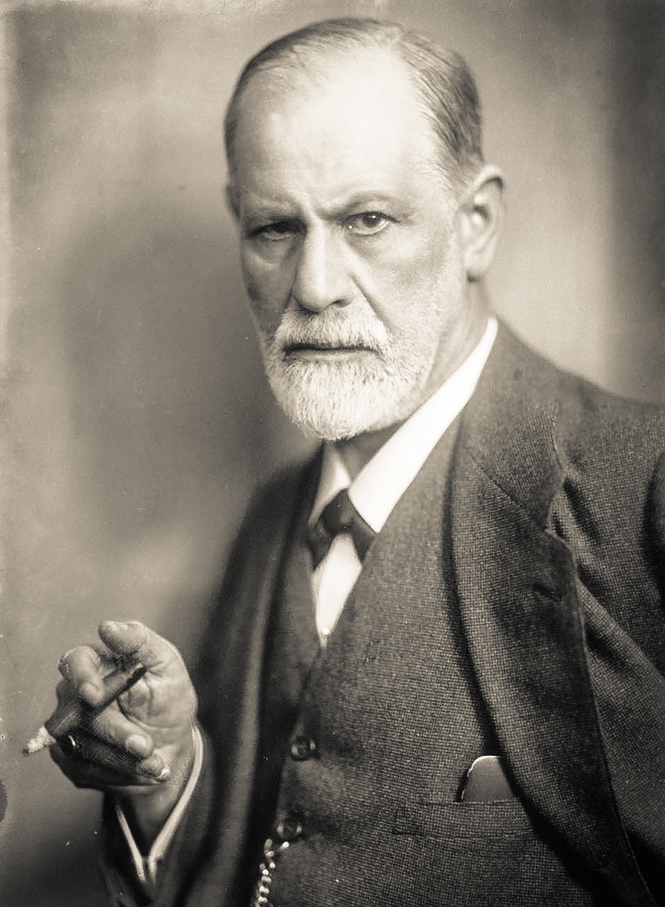
Freud had a beard, but not a hipster one. His analysis of the human condition allies with that of Marx and Nietzsche; it’s bleak.
Iván Szelényi’s course on the Foundations of Modern Social Theory is a fascinating trip through some key thinkers, from political philosophers to economists, psychologists and more broadly based social scientists. If anything, perhaps, it shows how blurred the lines are between the disciplines; linking Marx, Nietzsche, Freud and Weber to me at least was not clear: Marx was either a political scientist or an economist; Nietzsche was an existentialist philosopher; Freud was a psychologist; and Weber a sociologist. Where they coalesce, Szelényi suggests, is that they are all critical theorists. They are concerned with consciousness, with what is in the mind. Giving voice to their common purpose, he said they are suggesting that ‘[w]hat is in your mind is not necessarily what you think it is. Let’s subject your consciousness to critical scrutiny.’ His heavily accented presentation is both compelling and dramatic, and the course is to be recommended, as is the Open Yale program in general. A fabulous educational resource.
In an almost throwaway comment towards the end of his lecture on Freud, Szelényi suggests that Freud saw civilisation itself as a technology. To begin with, nature and the world is the source of our unhappiness – our discontent – and therefore we seek to assert control over it. This is something that reflects Lewis Mumford (our system that ‘…makes control over physical nature, ultimately control over man himself, the chief purpose of existence’), Murray Bookchin’s ecological worldview, and more recently the laments of Timothy Morton, Ian Bogost and the Object Oriented Ontologists – more on them later. This man versus nature battle, or subject versus object if you prefer, yielded for Freud the civilisation with which we are possessed, one bent on world domination, so to speak. Our system of social relations, our politics, is designed to extend more and more control over the world, and over mankind itself. Our civilisation is a technology, a machine, that is designed towards that end, designed to relieve us of the pain and frustration that nature inflicts upon us, up to and including mortality itself. Morton suggests that we are in fact already governed by what is effectively a primitive Artificial Intelligence, that of industrial capitalism.
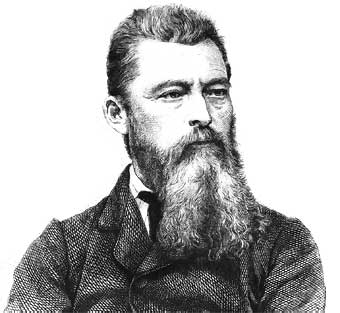
Marx’ extension of Feuerbach was accompanied by one of his more famous quotations. Writing in the Theses on Feuerbach, ‘the philosophers have only interpreted the world, in various ways,’ Marx said. ‘[T]he point is to change it.’ Feuerbach concerned himself with the spiritual and theological, while Marx was more revolutionary. How then could one take an abstract concept of alienation and explain how it meant something tangible, more actionable?
Things are pretty strange, it’s got to be said. But are they actually alien? (image credit Kim Hunter)
The question of technology and our relationship to it is one that has preoccupied me for some time now. It is separate from us as a concept – technology is not, so to speak, human – and yet it is deeply intimate in so many ways, so much as to make us think that our existence is dependent on it, as is our identity; Winner’s formulation of technology as a Wittgensteinian form of life (as I wrote about in my recent thesis) appears to me to be an appropriate joining of the human being and our technology, like Kevin Kelly’s ‘technium’, a kind of skin. But just as it becomes more deeply insinuated into our lives, there is something discomfiting about it, something unnatural, something foreign. Something alien, perhaps.
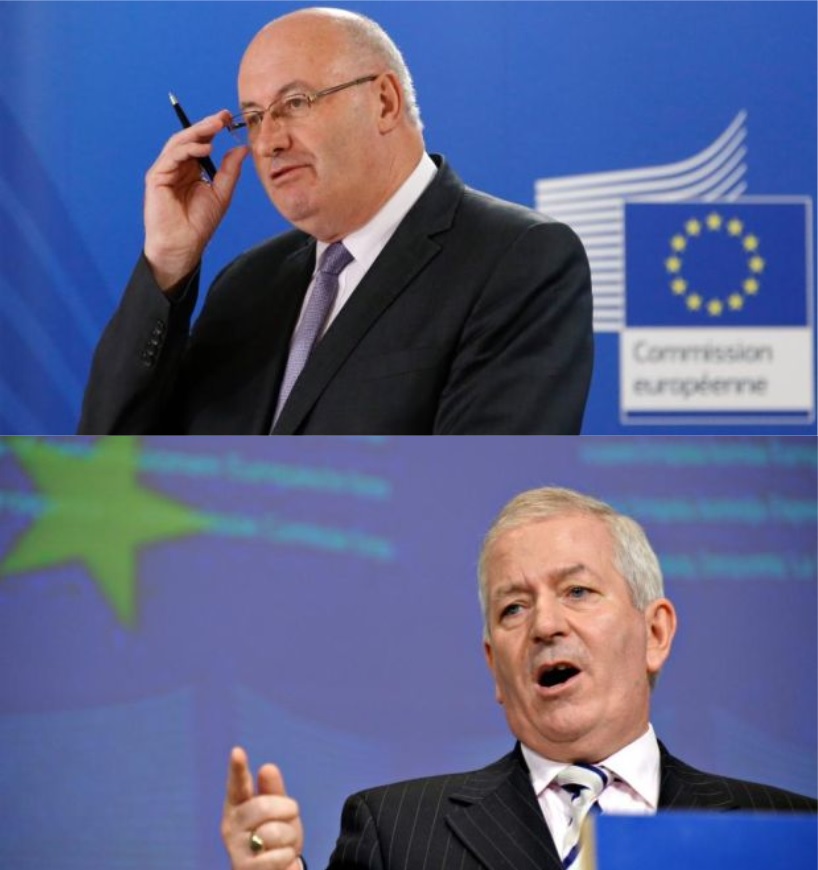
Phil Hogan and Charlie McCreevy were both dispatched to Brussels as a salve for a wounded government. The Ancient Greeks figured out this move first.
In 2004, Bertie Ahern’s government was busy deregulating the banking sector in Ireland, and GDP growth was accelerating. There remained some concerns, however, and some discontent, culminating in Fianna Fáil’s dismal local election performance in May of that year. Charlie McCreevy, the outspoken Finance Minister in the coalition government, became a lightning rod for discontent, both a party and public representation of why Fianna Fáil had done so badly. He was dispatched to Brussels with what some may term indelicate haste, dismissed from Irish domestic politics, and became EU Commissioner.
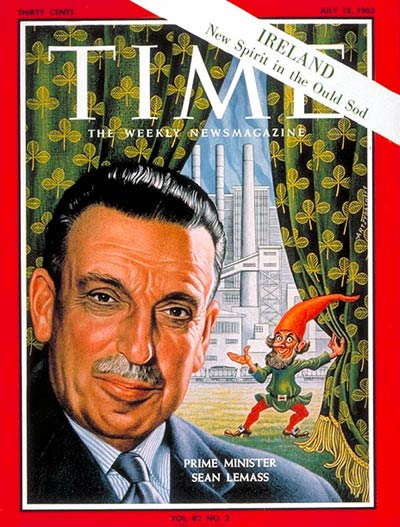
Lemass committed Ireland’s future to one of sovereign compromise. He had no choice.
The international system is a complex and convoluted thing, and sets the framework against which States are measured for their effectiveness, righteousness, or other measures that could serve as proxies for legitimacy: transparency, robustness, even happiness, or goodness. According to these indices, Ireland performs reasonably well – very well actually. It is the seventh most ‘unfragile’ country in the world; the eleventh most ‘good’; the 18th most transparent; and the 19th happiest. Most of these indices combine different metrics such as GDP, social metrics like unemployment, education rates, and so on, which tend to mean that Ireland – and other countries – won’t deviate too much from one ranking to the next. So Ireland performs well as a country. However, the combination of the EU Crisis, Brexit, and Trump’s America seem to represent a trifecta of bad things over which Ireland has little or no control, and could send the country hurtling down those indices. So if Ireland has so little control over these shaping factors, is Ireland in fact a legitimate country, a genuinely sovereign power?
The election of Donald Trump may signal a slap in the face for our neoliberal orthodoxy, but it’s certainly not a death blow. It remains to be seen how effective he will be in disrupting the stasis that has gripped western liberal democratic governance for much of the past quarter century. That it requires disruption is certainly true; reform, at least. But it remains unclear what will replace it other than a ball of resentment and anger. Just as Rick Page declared that ‘hope is not a strategy’ in 2001, the same can be said of anger. But what has that got to do with vegetarianism? Stick with me.
Do the disaffected know what they want? Agency is one thing: leadership and direction is another.
Ross Douthat in today’s New York Times declares our time a crisis for liberalism, the left having ‘lost its way’, in the aftermath of the election of Donald Trump. It’s been a popular theme. In 1969, Ted Lowi declared the end of liberalism, in favour of interest group liberalism, in part a kind of elaboration on Eisenhower’s theme of the military-industrial complex. The liberalism of which we speak has long been defined in terms of economics and economic goods, how the distribution of resources and the freedom that comes with fair access to those resources, can allow mankind to flourish. Friedman’s classic Capitalism and Freedom from 1962 defined the concept, which was ultimately routed in eighteenth century enlightenment thinking, and in particular the French Revolution. Its progression through International Law and the Universal Declaration of Human Rights in the twentieth century brought at its end an essential global consensus: Liberal Democracy was it. This was the end of history. Continue reading “Neonihilism and the Failure of Liberalism”→
The New York Times ran an editorial yesterday on what it called ‘a coup’ against the Supreme Court. The death of Antonin Scalia earlier this year, and the Republican Party’s refusal to entertain a replacement has rendered the previously nine, now eight judge court unable to resolve some important cases, split evenly as they are between four generally liberal and four generally conservative justices. The GOP Presidential Nominee, Donald Trump, has recklessly attacked other institutions in his scorched earth strategy that followed his poor showing at the debates, including the Military, the FBI, the President, the Federal Reserve, and the Media. Early on in the campaign, he attacked a judge who ruled against him, claiming the judge was biased because he was Mexican-American. He has threatened to jail his opponent if he wins, he has consistently attacked and undermined the electoral process itself, and encouraged voter suppression. Every pillar of democracy in America has been weakened by Mr Trump’s candidacy whether he wins or not, and people love him for it.




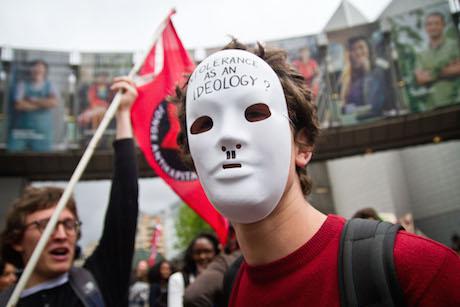

 State Legitimacy