The Brits are having another Oxbridge-style debate about keeping nicotine away from children, with Sunak on the one side arguing that there’s nothing ‘unconservative’ about protecting children, while “former Prime Minister” (the title needs those quotes) Liz Truss on the other saying it’s Nanny State nonsense. This idea of ‘being conservative’ has morphed over time, but there are certain things that it retains, not least a belief in personal freedom. It’s laden with hypocrisy of course – not least that the current and “former” Prime Ministers, both Oxford graduates, are arguing about how the hoi polloi should behave.
Continue reading “Being Conservative”Category: Inequality

In a very crude sense, the western history of political philosophy can be divided into five phases: the city state Greek democracy, an oikonomia derived in Ancient Greece from a principle of agreed control; colonial empire, deriving first from the Greek colonies and extending into the military-bureaucratic structures of the Roman empire; federalist patrimonial states, an essentially feudalist structure allowing for larger domains to be managed through grace and favour; and modern variations on social democracy (including communism) since the French Revolution, based on concepts of individual equality and freedom. Max Weber, Francis Fukuyama and countless others have variations on these phases and structures, some more global (Fukuyama in particular considers Indo-Sino histories), and others more scientific (Weber’s forensic sociology in particular).
Continue reading “Failures of Political Philosophy”
What has happened to Europe? What of our glorious post-war project to bring together our cultured peoples after centuries of war, that brave experiment not merely in statecraft, but in post-state statecraft, to redefine government, and seize peace to our hearts? It has persevered and grown for over sixty years, launching exuberantly into the new Millennium with the Euro, but now she finds herself beset on all sides by vast forces including geopolitics, security, technology and global finance. Worst of all, Europe seems to have lost its soul. Not merely its raison d’etre, but its spirit, its ambition. What is missing?
Continue reading “The Lost Soul of Europe”
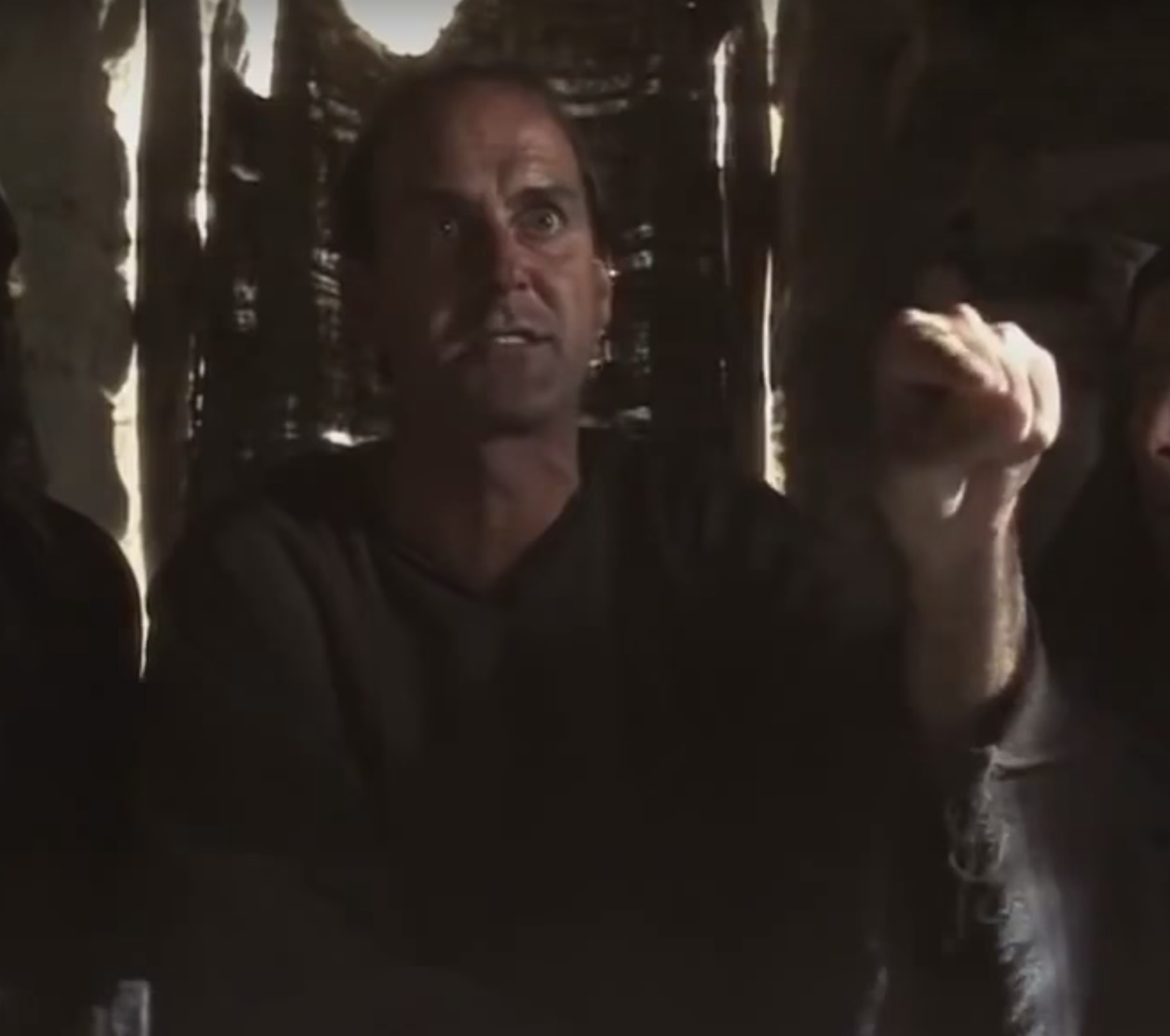
Monty Python’s Life of Brian is a delightful re-telling of the story of Jesus in a secular and historical context, finding its humour in the conflict between orthodox and invariably religious interpretations of the time, and a more ‘enlightened’ understanding, based on archaeology and academic research. As it wends its way through its telling of life in a Roman colony, the real politique is surfaced in the resistance movement the People’s Front of Judea (PFJ). During one of their serious and clearly well intentioned meetings, the leader Reg berates the Romans for their oppression of the poor Galileans, asking in a fit of rhetorical pique ‘What have the Romans ever done for us?’ One lonely voice suggests ‘the aqueduct’, which Reg grudgingly concedes. Another suggests ‘sanitation’. Several others venture still more technologies, which Reg attempts to summarise thus: ‘All right, but apart from the aqueduct, sanitation, the medicine, education, wine, public order, irrigation, roads, a fresh water system, and public health, what have the Romans ever done for us?’
Continue reading “Postcolonial Guilt, Revisionism, and the Idea of Progress”