The New York Times ran an editorial yesterday on what it called ‘a coup’ against the Supreme Court. The death of Antonin Scalia earlier this year, and the Republican Party’s refusal to entertain a replacement has rendered the previously nine, now eight judge court unable to resolve some important cases, split evenly as they are between four generally liberal and four generally conservative justices. The GOP Presidential Nominee, Donald Trump, has recklessly attacked other institutions in his scorched earth strategy that followed his poor showing at the debates, including the Military, the FBI, the President, the Federal Reserve, and the Media. Early on in the campaign, he attacked a judge who ruled against him, claiming the judge was biased because he was Mexican-American. He has threatened to jail his opponent if he wins, he has consistently attacked and undermined the electoral process itself, and encouraged voter suppression. Every pillar of democracy in America has been weakened by Mr Trump’s candidacy whether he wins or not, and people love him for it.
There has been much written in recent times about post-truth politics, and much associated naval gazing as commentators, analysts and politicians themselves have tried to understand how to deal with all this. Leave campaigners in the UK promised £350m a week for the NHS; Donald Trump still thinks he opposed the war in Iraq; and Vladimir Putin claimed no involvement with the war in Ukraine. Populism, reactionism, anti-intellectualism – call it what you will, it’s certainly got currency.
Speaking of currency, the pound has taken a pounding since the Brexit vote, and overnight trading on the 6th-7th October witnessed a flash crash that traders have struggled to explain. David Bloom at HSBC put it that the pound had become the de facto opposition in Britain. ‘Sterling,’ he said, ‘has become a structural and political currency.’ I’d go further than that. It’s the algorithms providing the opposition. The algorithms governing the trading desks even scrape news feeds to see potentially influential stories (one commentator suggested that comments from Francois Hollande on the Brexit negotiations may have triggered the ‘flash crash’). They sense and learn, and respond, constantly scoring and valuing political decisions and the smallest market moves.
The algorithms then form their own truth. This isn’t post-truth politics, it’s absolute truth. And that is potentially a whole lot worse.
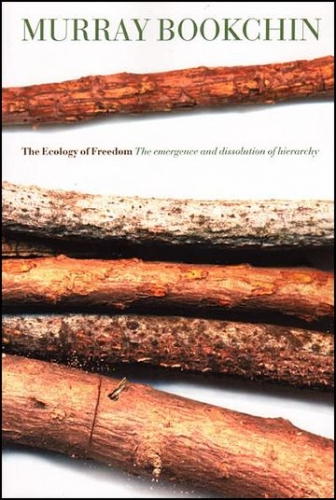
Murray Bookchin’s The Ecology of Freedom was a book about anarchism. It just didn’t call it that.
We live in a perpetual reckoning. It’s a strange place in some respects, and not very forgiving. It’s a place where everything is counted, everything is measured, billed, quantified. I’m talking, of course, about the digital space that we inhabit today, where our politics and our societies function and grow, where our families meet, our groceries are procured, and our priests broadcast Mass.
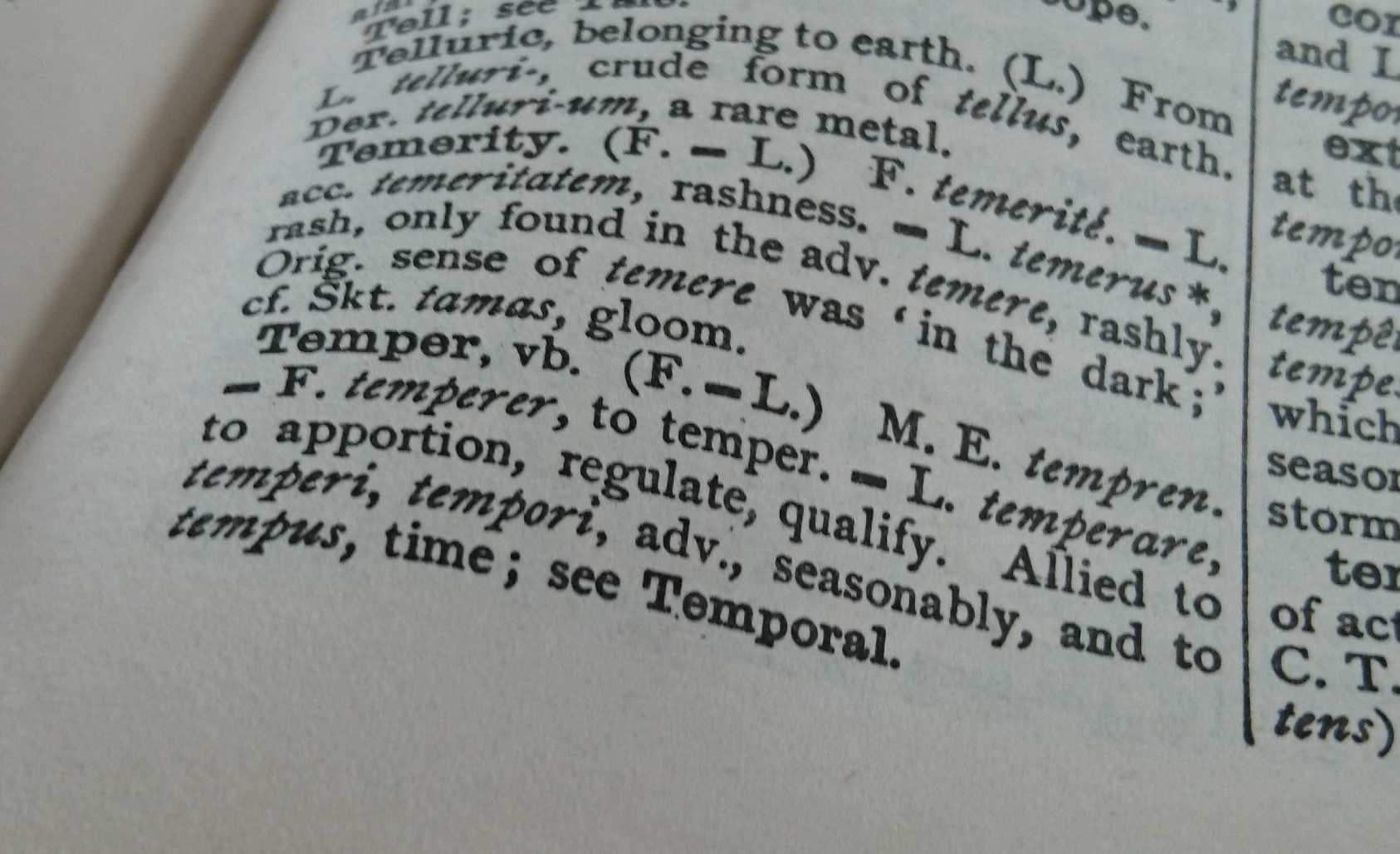
Temper – Tempus – Temporal: Machines are clocks, but they have no temper.
I had the pleasure this week of addressing the Royal Irish Academy on the subject of Digital Citizenship, which, rather than addressing the narrow construct of person-state relationship, instead took in a broad sweep of life in the digital world. Part of a series themed around the constitution, it focused on issues of growing up a teenager in the digital world, data protection (there were a lot of lawyers in the room, not least my fellow presenter Oisín Tobin of Mason Hayes & Curran), privacy, artificial intelligence and the politics of all that. In two hours, it was a hurried skip across disciplines and dystopias, which illustrated in equal measure the interest and enthusiasm people have for addressing the issue (there was barely a seat left in the hall), and the strange paucity (it seems to me, at least) of opportunities that there are to pursue in particular the ethical, policy, and political implications of our digital lives. Convened by Dr John Morrison, the Academy Chair of the Ethical, Political, Legal and Philsophical Committee, and expertly chaired by Dr Noreen O’Carroll, perhaps this is the beginning of an attempt to address that.
“So aren’t computers just better at everything?” I asked.
“When a 90-year old woman is trapped in a collapsed and dangerous building, we choose to send several healthy young men in there to save her. It makes no sense. An AI wouldn’t do it. But we couldn’t live with ourselves if we didn’t.”
My work on the politics of automation has led me to some fascinating conversations, not least that observation on pervasive automation. It highlights a humanity that rests beyond mere calculus, markets and rationality. In the same way as a creationist invites the physicist to explain what came before the Big Bang, we all have this nagging sense that there is a whole lot more that we don’t know; about consciousness, being, and society; about what it means to be human. Continue reading “Postmodernism and the Neoliberal Failure”→
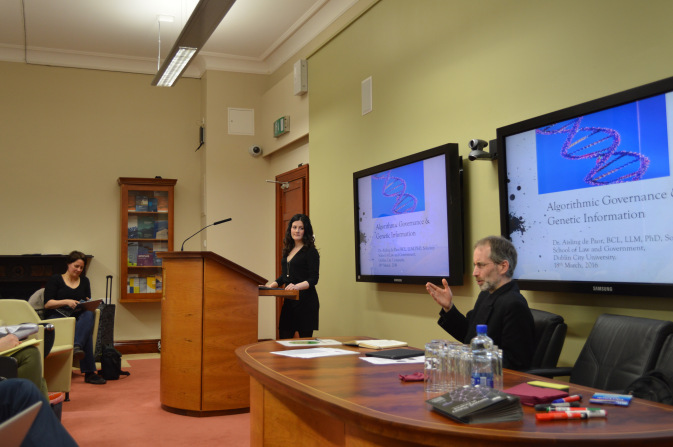
Dr Rónán Kennedy Chairs a session at the Algorithmic Governance workshop at NUI Galway
I had the privilege to participate in a workshop on algorithmic governance this past Friday at my alma mater, the National University of Ireland, Galway, under the supervision of Dr Rónán Kennedy and Dr John Danaher of the Law Faculty. and co-funded by the Colleges of Business and Public Policy. It’s part of a wider program of research grandly titled ‘Algocracy and the Transhumanist Project‘, which promises to tread some fascinating pathways. Comprehensive synopses of the event have already been published by Dr Danaher and one of the speakers Dr Muki Haklay, so I won’t re-do their work, but instead refer to one of the particularly interesting themes that emerged from the work.
The blockchain is a computerised public ledger that assures contracts and other transactions. It could save us all!
Property, and – as philosophers might refer to it – the claim to possession and ownership of externalities, has long been a source of some disquiet. Jean Jacques Rousseau in the Second Discourse (The Discourse on Inequality) begins the second part with the dramatic opening line ‘[t]he first man who, having enclosed a piece of ground, bethought himself of saying This is mine, and found people simple enough to believe him, was the real founder of civil society.’ Plato before him and Marx later both advocated collectivisation, but Rousseau was no communist. The reality of what man had become made such reconstruction impractical. Yet the concept of property has led to inequalities that threaten capitalist society. Slavoj Zizek suggested that ‘…today’s global capitalism [may] contain antagonisms which are sufficiently strong to prevent its indefinite reproduction…’ including what he called ‘…the inappropriateness of private property…‘ especially intellectual property. Rousseau’s prescription was The Social Contract, and the abstraction of the General Will, an investiture of political legitimacy in the sovereign.
The Social Contract is not perfect, of course. While the abstract philosophical structure represents a social order that manages compromises, individual freedom is not well protected at the margins, especially for minorities, and arguably the construct itself has a deterministic character. Society embodied in an overbearing political structure can ‘suggest’ a propriety of the group that denies individualism, and blunts the edges of art. Rousseau’s concept of the amour propre, a kind of dangerous narcissism borne of man’s association with and reference to other men, takes the fundamental concept of property and converts it to a personal value judgement, an extension of the ego, of identity. Rousseau believes that ‘self-love’ is not a sufficient representation of self-interest: that is merely the survival instinct, the instinct for compassion. The amour propre is something more akin to Hobbesian vainglory, to Platonic Thumos, something socialised, referential, and caused by man beyond the state of nature. Where perhaps self-love may have been an evolutionary or biological necessity, the amour propre is the result of when man ‘…began to look at the others and to want to be looked at himself and public esteem had a value.’ It was something learned, socialised, evolved. It was designed externally, and internalised; it was not part of ‘naked’ man. Self-love tells me I need a roof in order to shelter and protect myself, and my family. Amour propre tells me I need a Porsche.
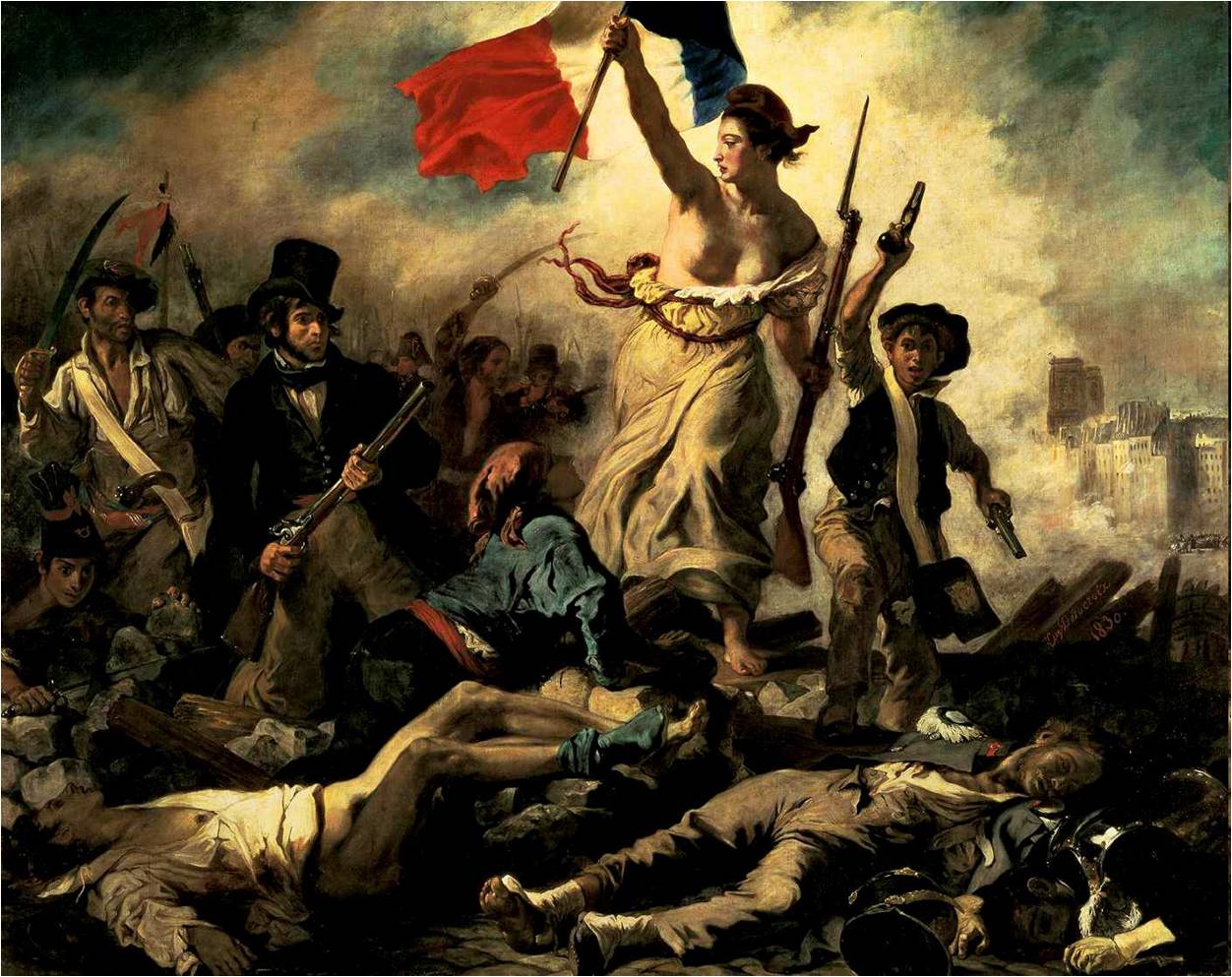
Delacroix’ Liberty Leading the People. She – Liberty – is so much more than the country: she is the ideal and the aspiration, the unadulterated guiding principle. Her path remains clear; but have the people stopped following her?
As Francois Hollande transitions from the bureaucratic administrator of the Fifth French Republic to a wartime leader in the latest instalment of the rolling war on terror, decisions are being made about France. The latest pronouncements – from overbearing surveillance measures introduced in the Summer in the aftermath of the Charlie Hebdo killings, to the most recent introduction of a three month state of emergency in order to deal with the Paris attacks – diminish democratic governance and accountability, in the short-sighted interests of expediency and national security. But this disaffected progression is not new; perhaps the January and November attacks were more overtly offensive than before, and appear more obvious inflection points, but we must go back ten years to the riots of 2005 to try and understand what is happening. Furthermore, the decisions being made today are not merely reflective of missteps taken in the past, but instructive as to the kind of France that is emerging for the future. And for France, we can read Europe, and Western Liberalism.
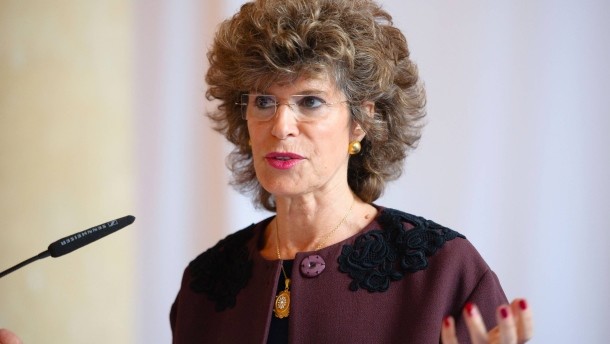
Shoshana Zuboff, Charles Edward Wilson Professor of Business Administration at the Harvard Business School
Shoshana Zuboff’s ‘Big Other’ and ‘Surveillance Capitalism’ as Future Economic Models
Shoshana Zuboff’s recently published article on what she has termed Information Civilization is a compact and helpful analysis of the kind of internet economies that are emerging in the early twenty-first century. This blog post is a commentary on that text. She takes Google’s Chief Economist Hal Varian as her foil, referencing his two articles Computer Mediated Transactions (2010) and Beyond Big Data (2013).
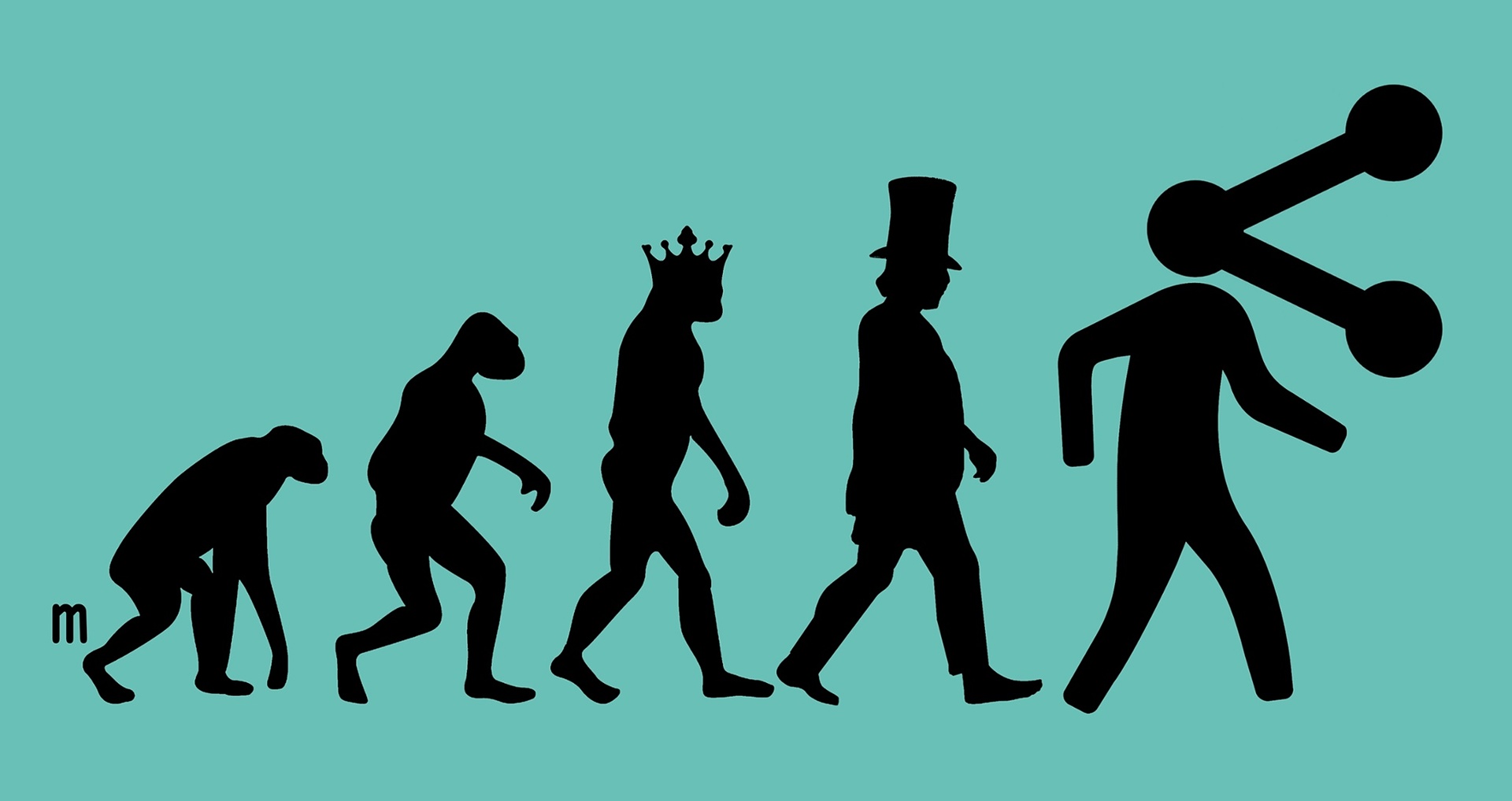
The graphics on the Guardian piece deserve reproduction. Mason argues no less than the evolution of a new kind of human, based on a ‘postcapitalist’ future.
Paul Mason‘s imminent book ‘Postcapitalism’ is plugged this weekend in the Guardian with an extended essay on the subject. Accompanied by some excellent graphics, some of which I’ve reproduced here, the broad thesis is that capitalism as we know it is ending, and that we are moving into a ‘sharing economy’, but at its heart is a Marxist argument about information and power. Mason goes so far as to argue that the changes we are witnessing herald the arrival of a new kind of human being, a sort of cocktail of Marxist proletarianism, social Darwinism, and Kurzweilian posthumanism.





 State Legitimacy