I apologize for not having posted in 2025, but as I had mentioned in late 2024 I was writing a book. The book has been completed, the first one at least, and is off to see if any agent considers it worth hawking around. More on that as we get it. The second book has more to do with science, and how we understand the world, and prompted me to think about a kind of layering of thought, a progression of a sorts, that I have been through myself. It begins – as did this blog – with concerns for politics, and how we manage ourselves – political philosophies. AS one dives deeper into political philosophy, one is drawn into the history of political philosophy, and then the philosophy of history follows soon after. Epistemic concerns lead to the philosophy of science, and how we know what we know, before ultimately we end up back at the philosophy of mind, cogito ergo sum and all that.
Continue reading “Ontological Layering”Tag: History
As a young man in college – a boy, really – I invited as an officer of the Society of Saints and Scholars at University College Galway (or NUI Galway, as we were being invited to call it) the ‘revisionist historian’ David Irving to come and give a talk on his philosophy of history. To say that he was controversial would be an understatement, although I do remember thinking at the time that the pejorative ‘revisionist’ in the soubriquet to which he was referred seemed both unnecessary and political. Were not all historians in some way revisionist? Otherwise, what was their function? In any case, and I don’t quite remember the ins and outs of the thing, there was a lot of hoo-hah and the event never happened, notwithstanding the man’s acceptance of our invitation.
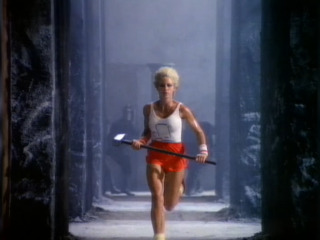
Continue reading “Historical Revisionism”Forty years ago, Apple changed the world when they launched the Macintosh computer, with a superbowl ad echoing Orwell’s 1984. So the story goes anyway. Reading that (really very good!) piece from Siva Vaidhyanathan in the Guardian this morning, I was struck as I so often am by the declaratory confidence of the headline. WORLD CHANGED; MACHINE LAUNCHED. Vaidhyanathan layers it on, claiming that the launch could be seen as ‘the beginning of the long 21st century’. It struck me in reading that we are now starting to see the end of the twentieth century as a historical phenomenon, and writing about it in a way that seeks consistency and consensus, in the same way as there is consensus about the rest of history as we have learned it – that there were two world wars in the 20th century, that the Cold War was between America and Russia, that the EU was formally launched in 1993, and so on. In structuring history, we superimpose salience upon people, and events, that may not have been obvious at the time, and that possibly misshapes our understanding of the world we live in today.
Continue reading “Cause, Effect, History, Truth”