Tag: Philosophy

The Poverty of AI

Of course it’s AI generated. It’s too perfect not to have been! Credit: Dall-E

Can we believe in AI? What does it mean to believe in AI? Is there truth in AI? Can AGI be in any sense profound, or revelatory? In many respects, AGI represents an imminent (immanent?) apotheosis in the modern liberal project: a realization of the bureaucratic, scientific model of the modern world, in automated magnificence. It heralds the potential for what Aaron Bastani calls – perhaps tongue-in-cheek – fully automated luxury communism. It appears on our horizon as a new end of history, our new Berlin Wall moment, our New Jerusalem. The State as a politico-philosophical project has intellectually been a quest for individual freedom; the most freedom, for the most people, avoiding the Hobbesian dystopia of all against all. Could AGI allow humankind to transcend the state as the fundamental organizing structure?

Continue reading “The Poverty of AI”

Magic, Religion, Science, Technology

There are two major projects that I am driving – the book(s) project, and an ongoing investigation into the epistemic challenge of technology, if indeed such a challenge is manifest. The books (there are three), without giving too much away, revolve around the development of early twentieth century cultural theory and its intersection with science, in tandem with early Reformation cultural transformations and historical narratives. The tension between science and religion, and within systems of belief are central to both projects. In the work on technology, the concern that I have been exploring for almost ten years now, if not more, is whether AI can supplant our history and our science as a source of some kind of institution of truth. Each project explores how we know what we know, how it informs our social and political structures, and how epistemology develops – a kind of techno-episteme.

Continue reading “Magic, Religion, Science, Technology”

Being Conservative

The Brits are having another Oxbridge-style debate about keeping nicotine away from children, with Sunak on the one side arguing that there’s nothing ‘unconservative’ about protecting children, while “former Prime Minister” (the title needs those quotes) Liz Truss on the other saying it’s Nanny State nonsense. This idea of ‘being conservative’ has morphed over time, but there are certain things that it retains, not least a belief in personal freedom. It’s laden with hypocrisy of course – not least that the current and “former” Prime Ministers, both Oxford graduates, are arguing about how the hoi polloi should behave.

Continue reading “Being Conservative”

The General Will And Predictive Analytics

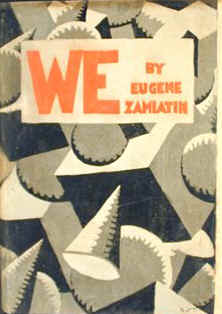
We_first_ed_dust_jacket
Zamyatin’s hero D-503 seemed quite pleased with his personal dystopia.

Jean-Jacques Rousseau’s 1762 work The Social Contract is in many respects an answer to his earlier work on inequality from 1754. In his discourse on inequality, he elaborated on the concept of amour propre, from which all inequality derived.  This amounted to a kind of egotism, or self-love of a particular kind, not what he calls amour de soi-meme, or love of oneself, which is a more visceral, base, defensiveness or protectiveness. The amour de soi-meme is a natural basis for self-preservation, much one could say as the spikes on a porcupine represent that animal’s amour de soi-meme.  The amour propre is the basis, he says, for honour, deriving as it does from a sense of esteem, something that is relative (to other people) and created by society.  Hobbesian vainglory, Platonic thumos, Freudian egoism, even Nietzschian supremacism – there are other incarnations of this concept, and in responding as he did in the Social Contract to this particularly human (and male) characteristic in The Social Contract, Rousseau extended the concept in The General Will. Continue reading “The General Will And Predictive Analytics”