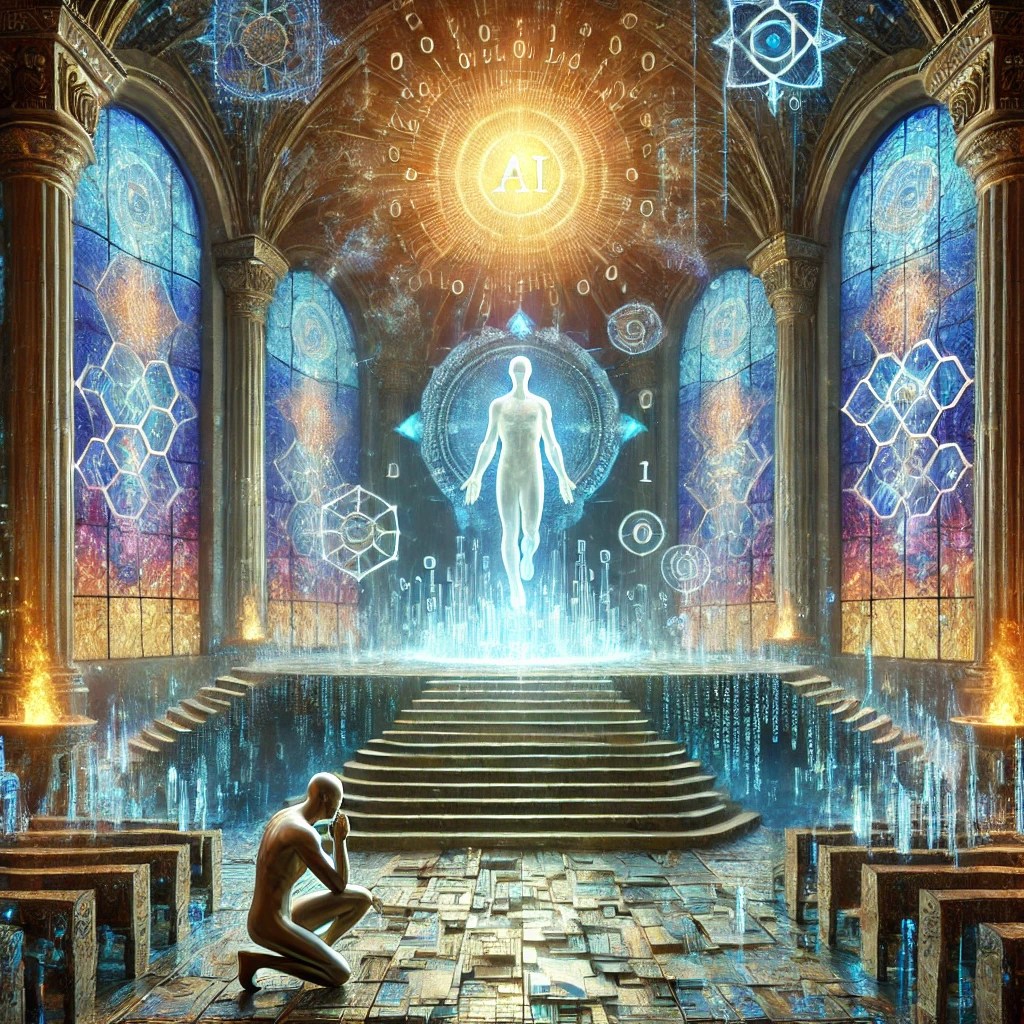
Can we believe in AI? What does it mean to believe in AI? Is there truth in AI? Can AGI be in any sense profound, or revelatory? In many respects, AGI represents an imminent (immanent?) apotheosis in the modern liberal project: a realization of the bureaucratic, scientific model of the modern world, in automated magnificence. It heralds the potential for what Aaron Bastani calls – perhaps tongue-in-cheek – fully automated luxury communism. It appears on our horizon as a new end of history, our new Berlin Wall moment, our New Jerusalem. The State as a politico-philosophical project has intellectually been a quest for individual freedom; the most freedom, for the most people, avoiding the Hobbesian dystopia of all against all. Could AGI allow humankind to transcend the state as the fundamental organizing structure?
Continue reading “The Poverty of AI”Tag: religion
There are two major projects that I am driving – the book(s) project, and an ongoing investigation into the epistemic challenge of technology, if indeed such a challenge is manifest. The books (there are three), without giving too much away, revolve around the development of early twentieth century cultural theory and its intersection with science, in tandem with early Reformation cultural transformations and historical narratives. The tension between science and religion, and within systems of belief are central to both projects. In the work on technology, the concern that I have been exploring for almost ten years now, if not more, is whether AI can supplant our history and our science as a source of some kind of institution of truth. Each project explores how we know what we know, how it informs our social and political structures, and how epistemology develops – a kind of techno-episteme.
Continue reading “Magic, Religion, Science, Technology”
As a young man in college – a boy, really – I invited as an officer of the Society of Saints and Scholars at University College Galway (or NUI Galway, as we were being invited to call it) the ‘revisionist historian’ David Irving to come and give a talk on his philosophy of history. To say that he was controversial would be an understatement, although I do remember thinking at the time that the pejorative ‘revisionist’ in the soubriquet to which he was referred seemed both unnecessary and political. Were not all historians in some way revisionist? Otherwise, what was their function? In any case, and I don’t quite remember the ins and outs of the thing, there was a lot of hoo-hah and the event never happened, notwithstanding the man’s acceptance of our invitation.
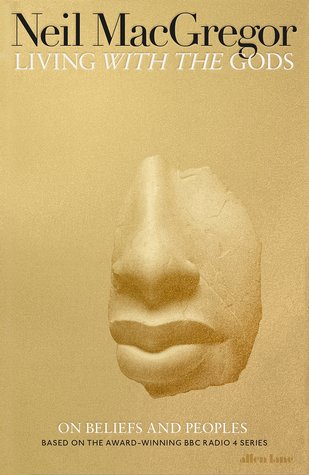
Continue reading “Historical Revisionism”The British Museum is a controversial edifice. In part a persistently triumphal display of looted treasure – such as the Parthenon Marbles and the Benin Bronzes – by a brutal and supremacist empire, part conservator of important artefacts of social history, its symbolism at a time of Brexit and resurgent nationalism is unhelpful to liberal sensibilities. It remains something of a contradiction that its erstwhile director, Neil MacGregor, combines a defence of its virtue as a world museum with criticism of the British view of its history in general as ‘dangerous’ (Allen, 2016).
Continue reading “Technologies of Theology”
AI poses several challenges for the religions of the world, from theological interpretations of intelligence, to ‘natural’ order, and moral authority. Southern Baptists released a set of principles last week, after an extended period of research, which appear generally sensible – AI is a gift, it reflects our own morality, must be designed carefully, and so forth. Privacy is important; work is too (we shouldn’t become idlers); and (predictably) robot sex is verboten. Surprisingly perhaps, lethal force in war is ok, so long as it is subject to review, and human agents are responsible for what the machines do: who those agents specifically are is a more thorny issue that’s side-stepped.
Continue reading “World Religions and AI”Tom Chivers in The Observer laments the demise of religion for its impact on social cohesion – and challenges that secularism needs to replace it with something else that works. I think that’s exactly what the Internet is for – new communities, new communications, new associations. The Internet, in that social sense, is the new religion.