Author: anthonybehan

Researching state legitimacy, AI, identity, critical theory, and how technology changes personal identity and the nation state. One wife, three dogs, six guitars, and a seldom used trombone. Work for IBM but this is completely independent of that.

Drones and American Identity

Foreign Affairs Death from AboveDan Byman’s defence of drones in Foreign Affairs (July / August 2013) sets out the case for drones, a highly effective, low risk method of taking out terrorists.  The changed nature of terrorism, with its globalised, stateless, and highly distributed character certainly presents significant challenges to the defence of the realm.  There are advantages over conventional military options – air strikes, ‘boots on the ground’, covert operations – and, in particular, the speed with which weaponised drones can be deployed makes them far more flexible tools for the military.  The politics, Byman adds, can be tricky, but most governments within drone strike domains are tacitly acquiescent.

If the objective of the exercise is to defeat terrorism, or, rather, the immediate threat of terrorism, then Byman is right – drones are extremely effective.  However, he is wrong in not addressing whether they advance the long term strategic interests of the United States. He limits his discussion on this to the prospect that drones create more terrorists in people whose families are killed or injured, perpetuating the hatred that turns people against America.  The problems are deeper than that – and impact the core of who and what America is.
Continue reading “Drones and American Identity”

Enemies of Legitimacy: Voter Apathy and External Interference

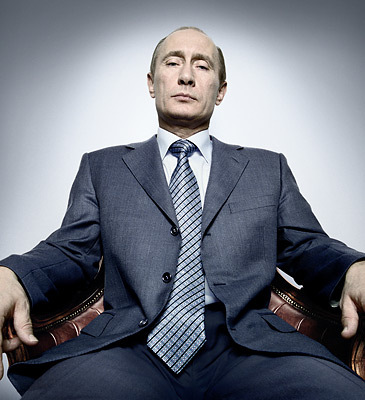
platon_putin1_width_600x
Russian President Vladimir Putin: Asserting Himself

The Syrian Crisis continues to dominate international news this week, as poorly executed Washington diplomacy prolongs the affair, and Assad and Putin teach them a lesson in media management.  The breathtaking hypocrisy in Putin’s defense of International Law (hopefully the New York Times doesn’t syndicate to Georgia) is matched only by Obama and Kerry in their grand pronouncements on human rights violations in the Middle East. If the weariness of the double standards in International Politics was insufficient to shake one’s faith in the State system, then perhaps we might take some time to think about the sustainability of institutions whose legitimacy is being persistently assaulted from within and without.

Continue reading “Enemies of Legitimacy: Voter Apathy and External Interference”

National Security and the Legitimacy of the State

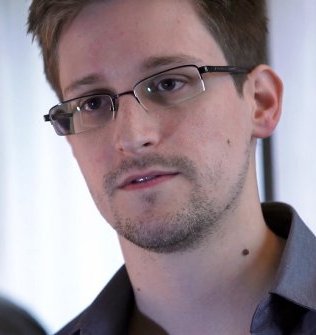
Edward Snowdon
Edward Snowdon: His revelations (though not new) have launched an avalanche of introspection and head scratching.

The New York Times and the Guardian have been digging ever deeper into the activities of the US National Security Agency or NSA following the leaking by Edward Snowdon of information about how they were spying both on countries and ordinary people at home.  Hot on the heels of the Chelsea Manning and Wikileaks diplomatic cables episode, there has been a constant flow of stories reporting on nefarious activities of spooks and governments, embarrassing opinions, and the mechanisms by which international diplomacy and spying are conducted, though Wired Magazine had got there first.   There are numerous angles to all of this.  There is the technology problem, an Orwellian, Kurtzweilian post-humanist dystopia where technology trumps all, and big data and analytics undermines or redefines the essence of who we are and forces a kind of a re-evaluation of existence.  There is the human rights problem, the balancing of the right to privacy and – generally speaking – an avoidance of judgement of the individual by the state, with the obligation to secure the state.  This issue is complex – if for example we have an ability to know, to predict, to foretell that people are going to do bad things, but we choose not to do that because it would require predicting also which people were going to do not-bad things, and therefore invade their privacy, is that wrong?  Many people said after 9/11 ‘why didn’t we see this coming?’ Which leads to the question – if you could know all that was coming, would you want to know?

Continue reading “National Security and the Legitimacy of the State”

The Syrian Complex

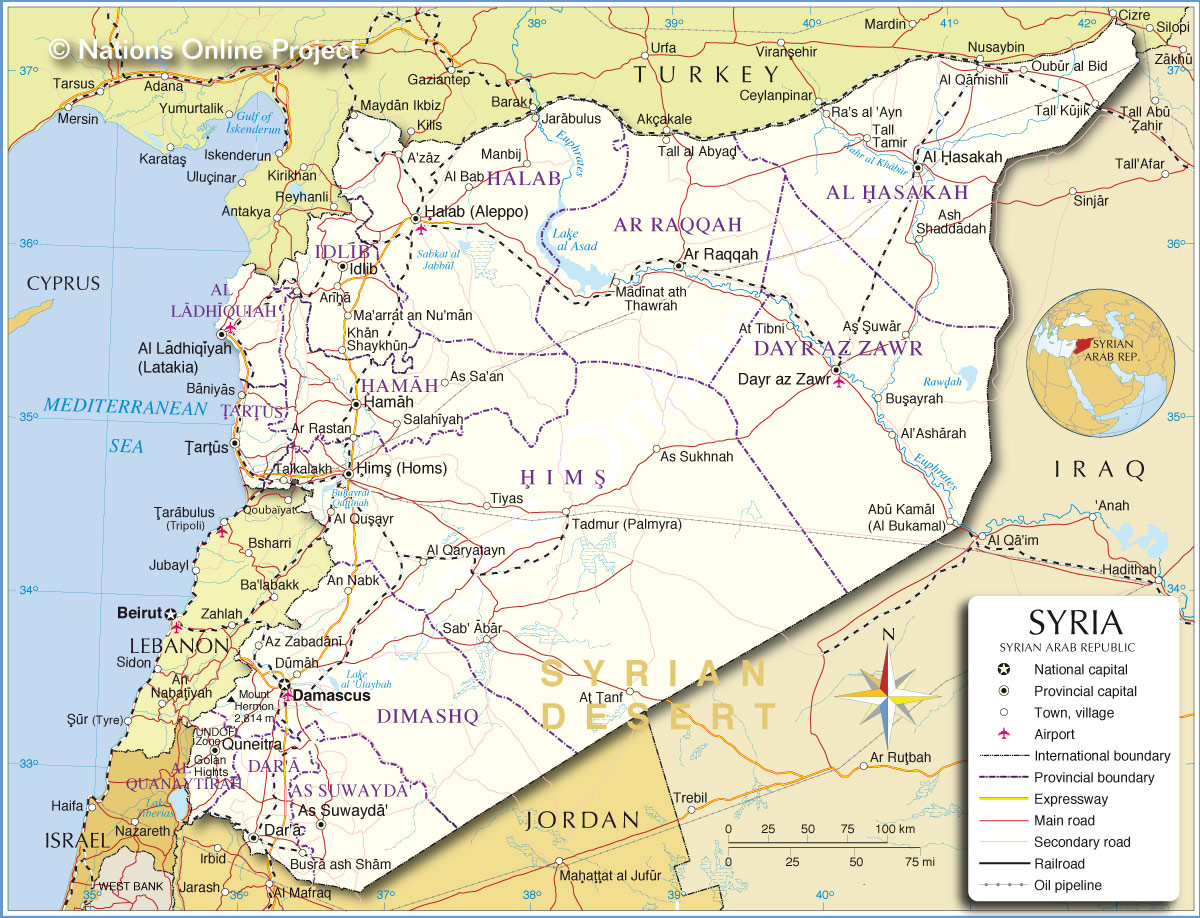
Syria's borders are all fraught
Syria’s borders are all fraught

Six months ago, it appeared obvious that Bashar Al-Assad was on his way out of Syria.  What was less clear, however, was who was likely to succeed him. And it is this particular point – the absence of a clear opposition – that has kept him in place. The various countries that have an interest are both local and global, and the rationale of each bears thinking about.

Let’s start with the neighbours.  Immediately surrounding Syria are Turkey, Iraq, Jordan, Lebanon and Israel.  Hizbollah – and therefore Lebanon – is supporting Assad, primarily one suspects because they think he will win. Syria has long been a friend of the Palestinians.  Assad himself put it thus in 2002: “As far as an occupier is concerned, there is no distinction between soldiers and civilians… There is a distinction between armed and unarmed, but in Israel everyone is armed. In any case, we adopted the following concept: resistance to occupation is a legitimate right.”

Continue reading “The Syrian Complex”

Syria – a face of war

Astonishing photo from Syria by Harold Doornbos. Makes you think about why we fight, what we fight for, and what price is worth paying for so called freedom.

haralddoornbos's avatarharalddoornbos

IMG_9066

I took this picture recently in Latakya-countryside (Syria) at a house where rebels and their families live. This little girl was sitting between guns as rebels prepared to go to the frontline.

View original post

A New Troika: Inequality, Sovereign Decline and Democratic Deficits

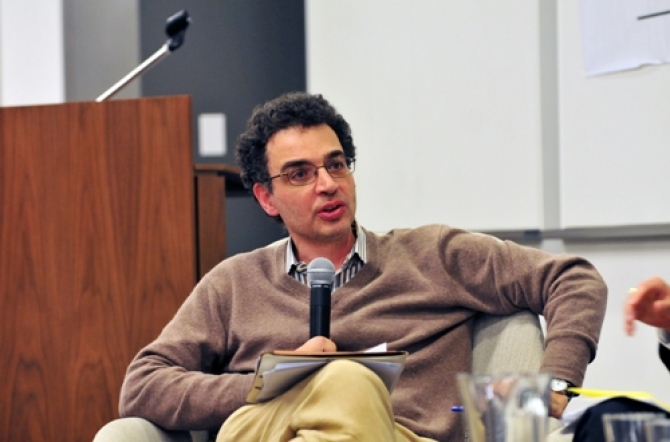
Serge Halimi_small
Serge Halimi: Considered Outrage

Serge Halimi is the editor of Le Monde Diplomatique, a kind of internationalised politico-philosophical publication from LeMonde featuring articles on international affairs and globalisation.  He is unrepentantly left wing, and in his May column, he unloads both barrels into what he perceives as a global elitist hegemony, The Tyranny of the One Per Cent.  His analysis is unusual in one respect, however.  It is an attack on a system, rather than its people; it is not lamenting greed (a kind of anti-Gordon Gekko) and is not so much bitter as it is critical.  Throughout the piece he constructs a compelling argument in the French Republican tradition – that eighteenth Century revolutionary philosophy that has – perhaps unintentionally – led us all to where we are today.   Continue reading “A New Troika: Inequality, Sovereign Decline and Democratic Deficits”

Electoral System Reform in Ireland

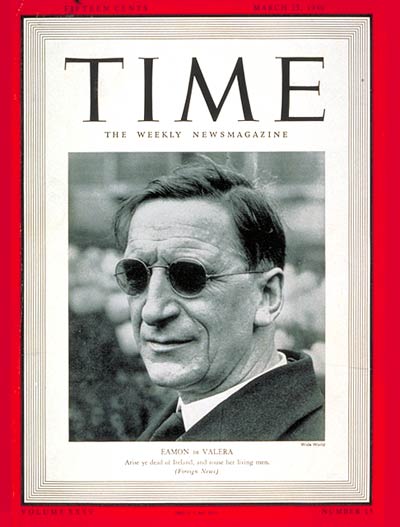
de Valera on Time
Eamon deValera on the front Cover of Time Magazine in 1940, shortly after the plebiscite that adopted his 1937 Constitution, Bunreacht na hEireann

An interesting opportunity has presented itself in my native jurisdiction in the form of the Constitutional Convention and its upcoming deliberations on the Electoral System. Notwithstanding the Justice Minister’s comments on the national radio station this morning, where he was – at best – non-committal on the notion of bringing forward a constitutional referendum on Marriage equality despite the overwhelming vote at the convention, there appears to be a de facto legitimacy attaching to the convention through its deliberate and measured process, and quasi-legislative approach.  If any proof was needed of this, it was in the structure of Senator Mullen’s attack on the result of yesterday’s vote – a strong Catholic advocate, and predisposed to oppose marriage equality, Mullen’s response was not to attack the virtue or otherwise of the decision, but the process by which it was reached.  In attempting to undermine the process, he was directly attacking the legitimacy of the institution (and convention members would do well to refer to it as such) in order to mitigate its impact on the legislature that have retained the final say.  Continue reading “Electoral System Reform in Ireland”

Habermas and the Crisis of The European Union

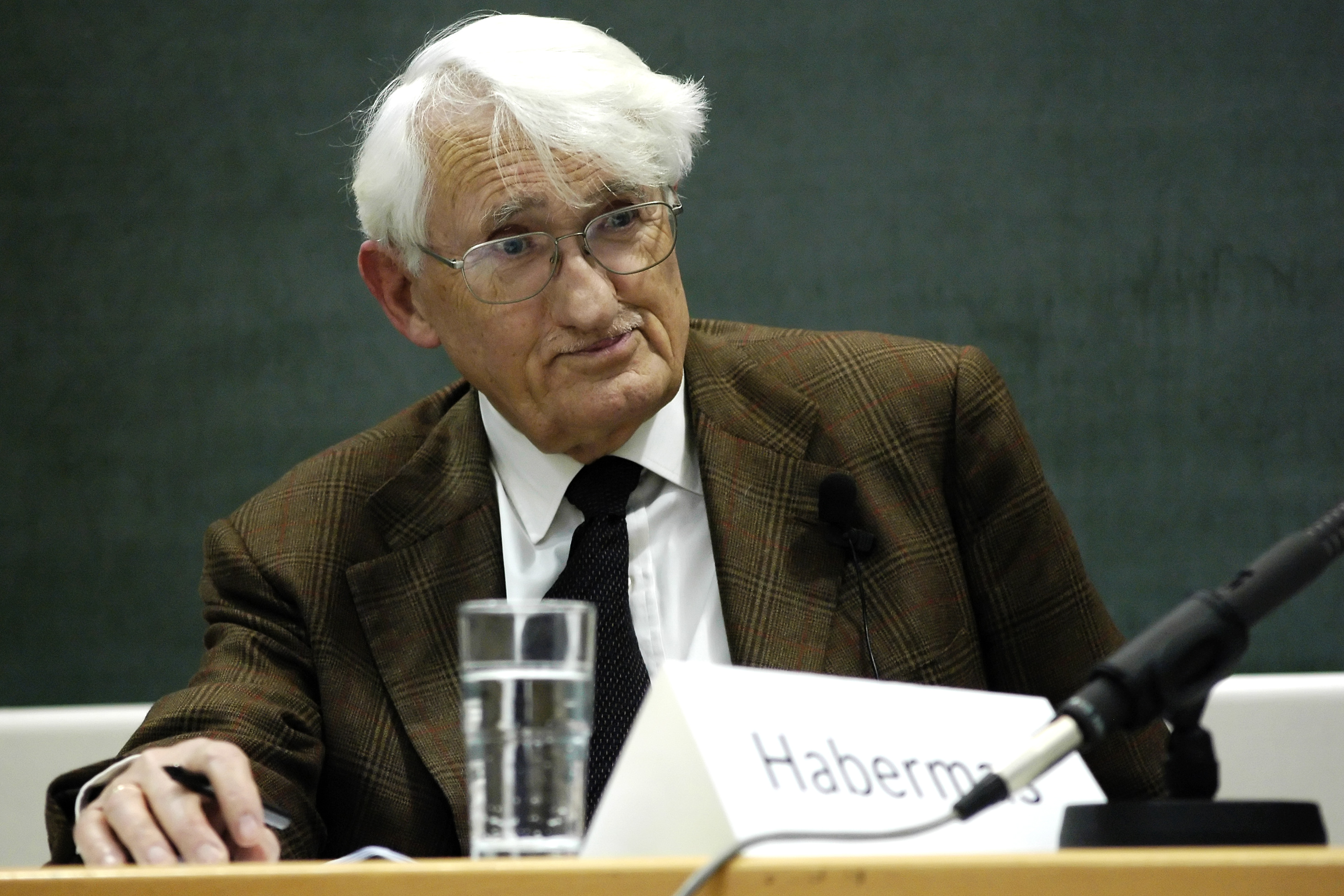
JuergenHabermas
Juergen Haberman: The German neo-communist informs a considerable part of German thinking on Europe, though one suspects from his writing that he is not too pleased with German strategy on the Crisis.

I’ve been reading Juergen Habermas slim volume The Crisis of the European Union: A Response, and I have to say that it is an exceptional read.  Not only is it very accessible – important, if you’re trying to send a message to politicians – but it is equally concise.  These are big thoughts, and grand ideas, and it is easy to get bogged down.  Highly recommended to everyone reading this – if you’re interested in my blog, Habermas is a must.  These are some of the notes I took on the Preface.

Continue reading “Habermas and the Crisis of The European Union”

Inequality and Democracy

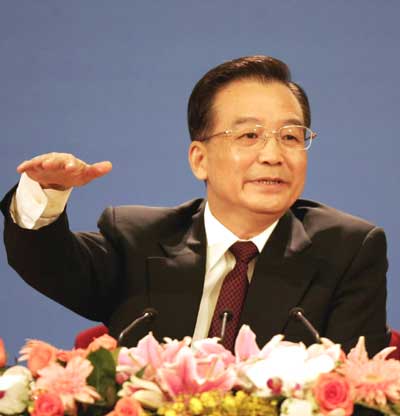
Wen Jiabao
Outgoing Chinese Premier Wen Jiabao: “Social strains are clearly increasing.”

Outgoing Chinese Prime Minister Wen Jiabao today added his voice (not for the first time) to those warning against rising inequality as a threat to China’s development.  Imbalances in economic growth he warned were threatening the success of the economy.  “We must make ensuring and improving people’s wellbeing the starting point and goal of all the government’s work, give entire priority to it and strive to strengthen social development,” he added.  It is a common refrain, and one that goes to the root of modern statecraft.

Continue reading “Inequality and Democracy”