Category: History

The Idea of France

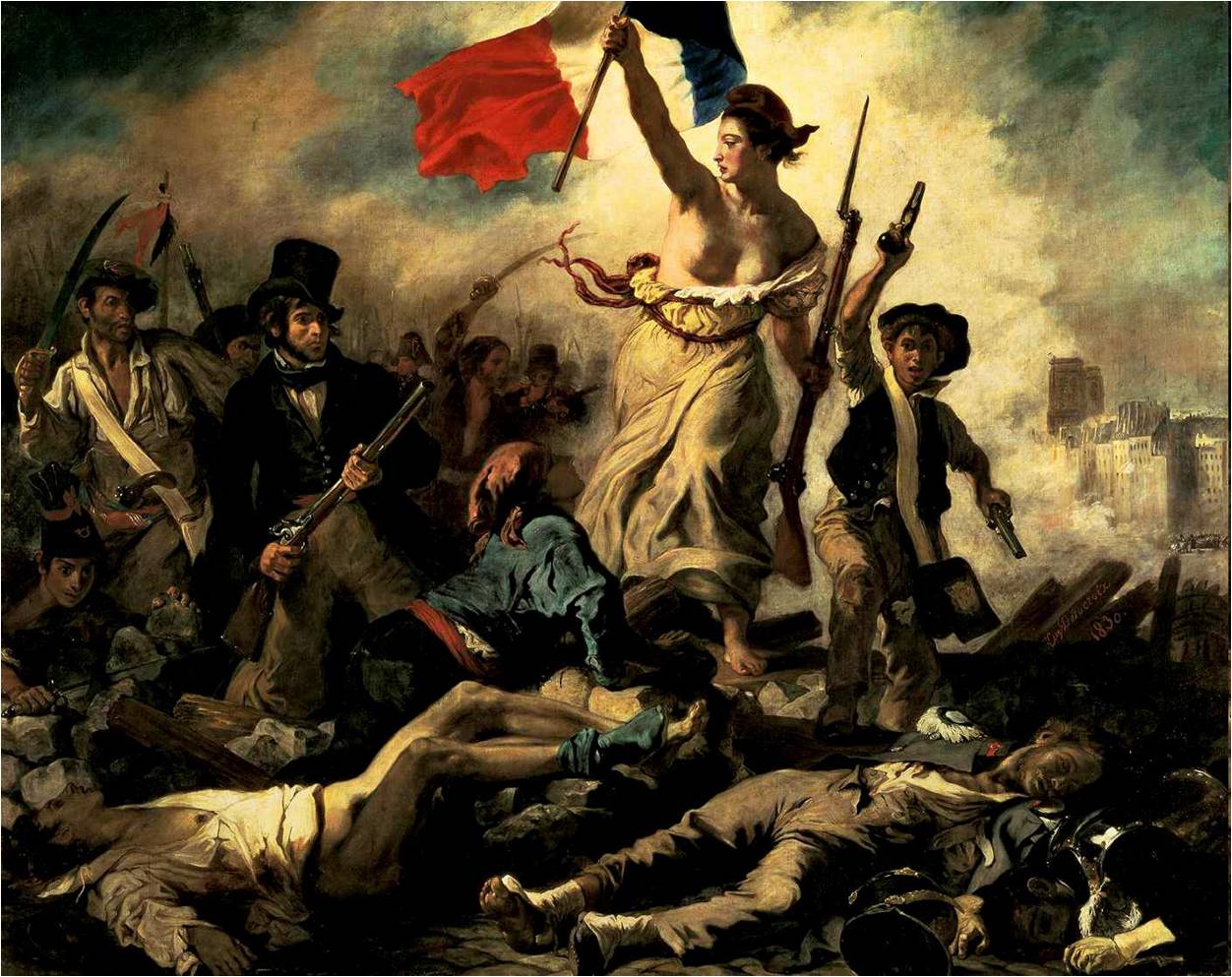
Delacroix's <i>Liberty Leading the People</i>
Delacroix’ Liberty Leading the People. She – Liberty – is so much more than the country: she is the ideal and the aspiration, the unadulterated guiding principle. Her path remains clear; but have the people stopped following her?

As Francois Hollande transitions from the bureaucratic administrator of the Fifth French Republic to a wartime leader in the latest instalment of the rolling war on terror, decisions are being made about France. The latest pronouncements – from overbearing surveillance measures introduced in the Summer in the aftermath of the Charlie Hebdo killings, to the most recent introduction of a three month state of emergency in order to deal with the Paris attacks – diminish democratic governance and accountability, in the short-sighted interests of expediency and national security. But this disaffected progression is not new; perhaps the January and November attacks were more overtly offensive than before, and appear more obvious inflection points, but we must go back ten years to the riots of 2005 to try and understand what is happening. Furthermore, the decisions being made today are not merely reflective of missteps taken in the past, but instructive as to the kind of France that is emerging for the future. And for France, we can read Europe, and Western Liberalism.
Continue reading “The Idea of France”

Church and State: What is the Church for?

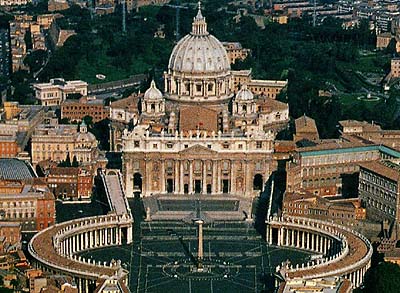
stpetersrome
The Roman Catholic Church: What is its New Role to be?

I was asked a question recently about the role of the church – in particular the Roman Catholic Church – and how it could be reinvigorated.  What is it missing, my interlocutor asked, in order to connect? The discussion led to some interesting thought connections. In the first instance, there appears to be a question about what role the church truly played in social structures – relative to the state – in more ‘successful’ times. In truth, it appears that the Church served as a quasi-state structure.

Bob Neuwirth‘s 2011 book on The Stealth of Nations looked at informal economies and structures. We’ve discussed informal economies this on this blog before, but also informal justice systems. That concept was about current day emerging countries, but if we go back fifty, one hundred years, there were limited formal state structures as we understand them today even in Western developed economies. Police forces are a relatively recent innovation, and in their earliest days they were sporadic at best. Hospitals and schools run by the state are similarly – broadly speaking – an innovation of the twentieth century. Before that, disputes were often resolved by community leaders – priests – and healthcare and education, such as it was, was provided by Churches. Whatever the Spiritual function, the practical matters of social organization were arguably far more important.  Continue reading “Church and State: What is the Church for?”

British Exceptionalism and the New Isolationism

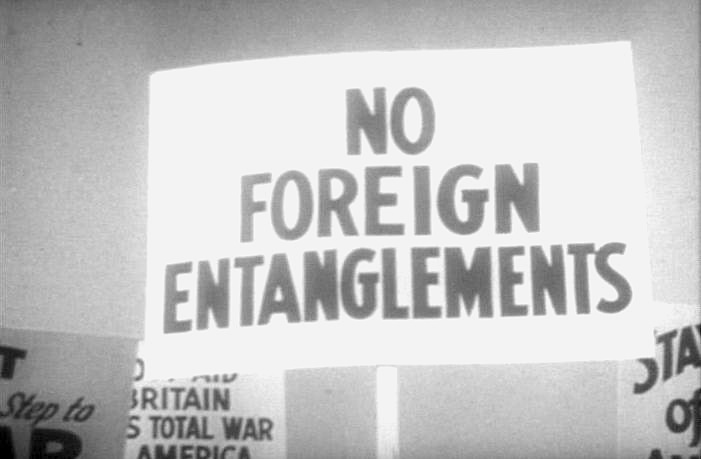
isolationismIn the early part of the twentieth century, Woodrow Wilson‘s America decided upon an Isolationist Foreign Policy concentrating their efforts on the battles at home. It wasn’t a new strategy – since the days of George Washington, the country as it emerged tried to distance itself from foreign entanglements, notwithstanding repeated encroachment on its borders by regional competitors and the death throes of European Power. The German ascendancy in the Atlantic finally forced their hand, and in order to protect the interests of America the country was forced into the war, and away from its isolationism. America, it appeared, could only advance her domestic interests if actively engaged on the International Stage.

Continue reading “British Exceptionalism and the New Isolationism”

Inequality and The Demise of the Euro

euro-meltdown
This is not going well.

The coalition negotiations in Germany appear to have stalled on the question of whether Chancellor Merkel will authorize further European capital (read: German capital) for Irish banks.  Further more, the SDP is trying to force Ireland to raise its corporation tax rate, an incentive that has diverted investments away from the rest of Europe in key areas such as the Internet and Biotechnology.  This is not the first time that Germany has taken on the appearance of a reluctant bully in Europe, forcing itself on the weaker nations who are not deserving of its largesse.  It is of course symptom, not cause, and the true reason for the current difficulties – perpetuated now for five years or so – is the structural failure of the European project to manage economic diversity.

There is some great wealth in Europe, concentrated in pockets such as the Ruhr valley, Northern Italy, Southern England, and other places.  Big industries such as auto manufacturing and pharmaceuticals employ hundreds of thousands, while financial services help to facilitate the trade of those products all over the world.  The wealth, however, is poorly distributed if we consider the wider context.

Continue reading “Inequality and The Demise of the Euro”

A New Troika: Inequality, Sovereign Decline and Democratic Deficits

Serge Halimi_small
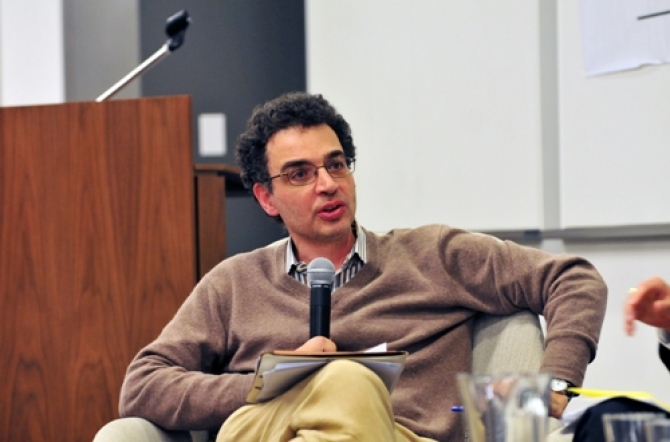
Serge Halimi: Considered Outrage

Serge Halimi is the editor of Le Monde Diplomatique, a kind of internationalised politico-philosophical publication from LeMonde featuring articles on international affairs and globalisation.  He is unrepentantly left wing, and in his May column, he unloads both barrels into what he perceives as a global elitist hegemony, The Tyranny of the One Per Cent.  His analysis is unusual in one respect, however.  It is an attack on a system, rather than its people; it is not lamenting greed (a kind of anti-Gordon Gekko) and is not so much bitter as it is critical.  Throughout the piece he constructs a compelling argument in the French Republican tradition – that eighteenth Century revolutionary philosophy that has – perhaps unintentionally – led us all to where we are today.   Continue reading “A New Troika: Inequality, Sovereign Decline and Democratic Deficits”

Inequality and Democracy

Wen Jiabao
Outgoing Chinese Premier Wen Jiabao: “Social strains are clearly increasing.”

Outgoing Chinese Prime Minister Wen Jiabao today added his voice (not for the first time) to those warning against rising inequality as a threat to China’s development.  Imbalances in economic growth he warned were threatening the success of the economy.  “We must make ensuring and improving people’s wellbeing the starting point and goal of all the government’s work, give entire priority to it and strive to strengthen social development,” he added.  It is a common refrain, and one that goes to the root of modern statecraft.

Continue reading “Inequality and Democracy”

The Legitimacy of The King

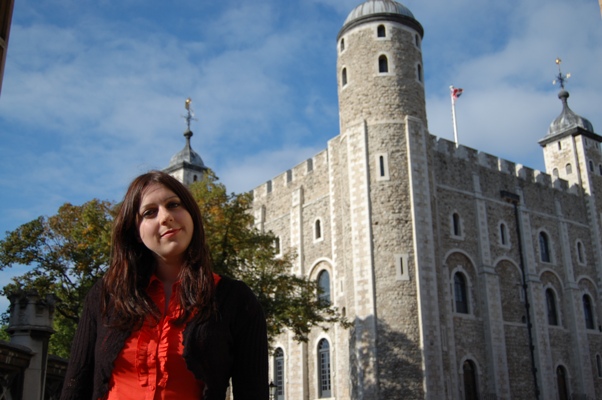
Janina Ramirez: Her series on the Hundred Years War on BBC4 is revealing on the legitimation of the King.

Much of the history of the infrastructure of State harkens back to feudal and older systems of clan based fealty, where one clan is in the ascendant, and brings other clans under its wing, and the head of the clan asserts a right to rule through strength and politics.  Francis Fukuyama talked a lot about that in his book on The Origins of Political Order.  This kind of authority is still seen today in monarchial type totalitarian states like Saudi Arabia and (formerly) Ba’athist Iraq.  There are some similarities with Bashar al Assad’s Syria, but they are limited.  Wiliam Dalrymple‘s latest book Return of a King reminds us that Hamid Karzai, the current leader of Afghanistan, comes from the same tiny sub-tribe from whence the original ruler of Afghanistan hailed during the British War there in 1839.  The Divine Right of Kings was a principle that emanated from Reformation Europe, and in particular from a Theologically thin doctrine hastily assembled to facilitate Henry VIII.  This doctrine was in a sense the harbinger of modern secularism; the French Revolution abhorred the gap between rich and poor, and questioned how righteous the King really was, ultimately resulting in the schism between Church and State.

Continue reading “The Legitimacy of The King”

Sovereignty, Poverty and Interdependence

sean_lemass_02
Seán Lemass, Taoiseach of Ireland 1959-1966. Lemass believed Ireland had given up its sovereignty to the International Community in the years after World War II.

Ireland has had a well documented, rather turbulent recent economic history.  Following on from the bursting of the property bubble and the attendant banking collapse, an extraordinarily myopic political decision to nationalise the exposure of the banks led to a sovereign debt crisis, and, ultimately, a bailout from the troika of the IMF, ECB and European Commission.  Apart from the loss of money, there was plenty dramatic wailing about the loss of National Sovereignty, and references to the War of Independence and the heroes of 1916 and ‘is this what they died for?’ rhetoric.  There was even a nuance to the sovereignty question, in that the country had lost her economic sovereignty, whatever that meant.

Now, politics has always had an uneasy alliance with the propriety of language, bending it to its will as any situation may have seen fit.  The distinction between economic sovereignty, and other sovereignty, one supposes, is that while we’re not necessarily allowed to award pay rises to civil servants, we are still permitted to invade England.  At least we have that, I guess.   Of course, the extent to which we are – truly – permitted to invade England is limited in exactly the same way as our freedom to spend money has been limited.  It is not a flat prohibition on action through coercive or other power that has limited what Ireland as a State can do; it is the threat of exclusion from international systems upon which we have become irrevocably dependent that limits our action.

Continue reading “Sovereignty, Poverty and Interdependence”

Systemic Issues: Marx, Python, Equality and Capitalist Doom

Karl_Marx_001
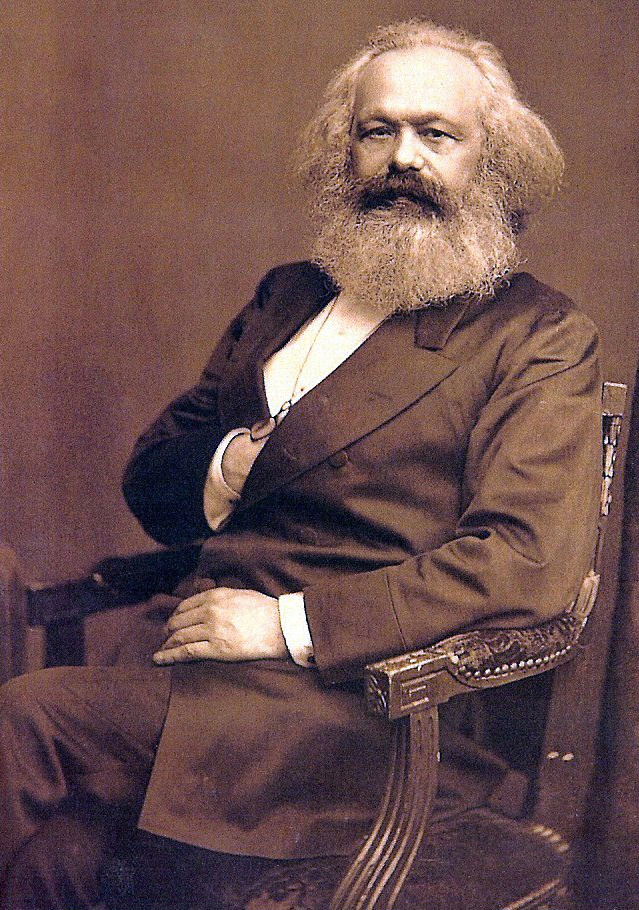
Karl Marx. The man had his moments.

Charles Moore’s article in the Telegraph yesterday caused something of a stir. Equality, he said, was not really a good thing at all. What’s that you say? He must be an elitist! How uncool is that! Well, essentially he was arguing that in the context of women in the army, and in particular on the front line of the army, that it was one step too far. Women just are not as strong as men, and therefore shouldn’t be there. His argument weakened when he extended it into civil partnership, defining marriage in terms of the legal structures for its dissolution, which appears to me to be something of a non sequitur. In essence, Moore misses the point that ‘unconventional’ couples are not seeking access to the institution, but rather to its attendant rights; indeed, they are seeking to fundamentally alter the institution, and make it more inclusive, rather than simply more equal.

Continue reading “Systemic Issues: Marx, Python, Equality and Capitalist Doom”

Nebulous Concepts: Revolution becomes Civil War

Google Trends on Syria
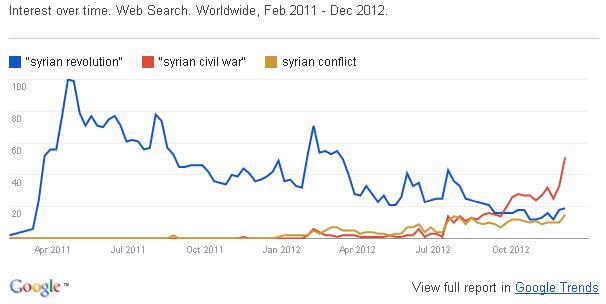
The Syrian Conflict became a Civil War on September 16th, according to Google. At, emm, about tea-time.

State Legitimacy is an amorphous thing.  It’s difficult to measure, difficult to assert, and relative.  Not only is the legitimacy of the state relative to other states, but it is relative across other dimensions too – relative to its citizens, or subjects, relative to its power or to the effectiveness of its power (an admittedly cyclical compare), and relative to the context of its actions.  In other words, it’s tough to pin down.  If we think of it another way, if we could measure state legitimacy, and we could similarly measure state illegitimacy, or the extent to which a state is failed, what would be the point at which we recognise one polarity from the other?

Continue reading “Nebulous Concepts: Revolution becomes Civil War”