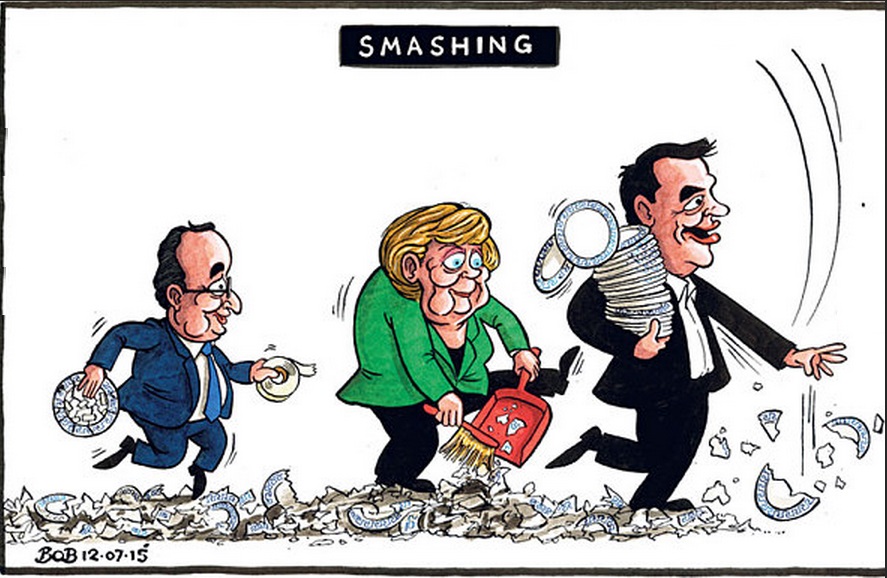
With the Eurozone crisis in full swing, and ‘Grexit’ now seeming inevitable, the differences between France and Germany seem stark. In particular, the position of Germany appears to have veered significantly from the position it had taken at least in the aftermath of unification, and certainly at the time of the Maastricht Treaty. This is troublesome on many levels, not least the inevitable parallels that will be drawn between a belligerent and newly assertive Germany, and its inter-war counterpart.
The Irish Data Protection Commissioner (DPC) recently doubled its budget, and is busy hiring and building capability. It’s an encouraging sign, the function had been significantly under-resourced in recent times; but one wonders whether there needs to be more done. The DPC is responsible for three areas right now – privacy in relation to Internet Services companies like Facebook and Google; privacy in relation to state organisations like the Gardaí; and privacy in relation to private national companies who possess data. That all three domains are vested in this single organisation says something for the breadth of work that these guys have to take on. But nowhere in their mandate does it suggest that they may have a role in commercial or security issues, for which there is no competent authority in the state, and certainly no strategy to address them.
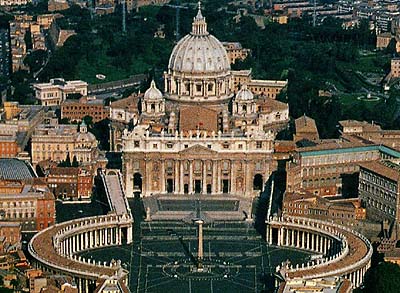
The Roman Catholic Church: What is its New Role to be?
I was asked a question recently about the role of the church – in particular the Roman Catholic Church – and how it could be reinvigorated. What is it missing, my interlocutor asked, in order to connect? The discussion led to some interesting thought connections. In the first instance, there appears to be a question about what role the church truly played in social structures – relative to the state – in more ‘successful’ times. In truth, it appears that the Church served as a quasi-state structure.
Bob Neuwirth‘s 2011 book on The Stealth of Nations looked at informal economies and structures. We’ve discussed informal economies this on this blog before, but also informal justice systems. That concept was about current day emerging countries, but if we go back fifty, one hundred years, there were limited formal state structures as we understand them today even in Western developed economies. Police forces are a relatively recent innovation, and in their earliest days they were sporadic at best. Hospitals and schools run by the state are similarly – broadly speaking – an innovation of the twentieth century. Before that, disputes were often resolved by community leaders – priests – and healthcare and education, such as it was, was provided by Churches. Whatever the Spiritual function, the practical matters of social organization were arguably far more important. Continue reading “Church and State: What is the Church for?”→
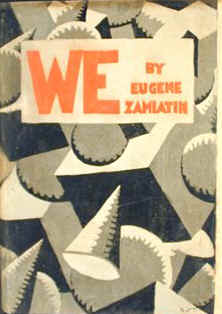
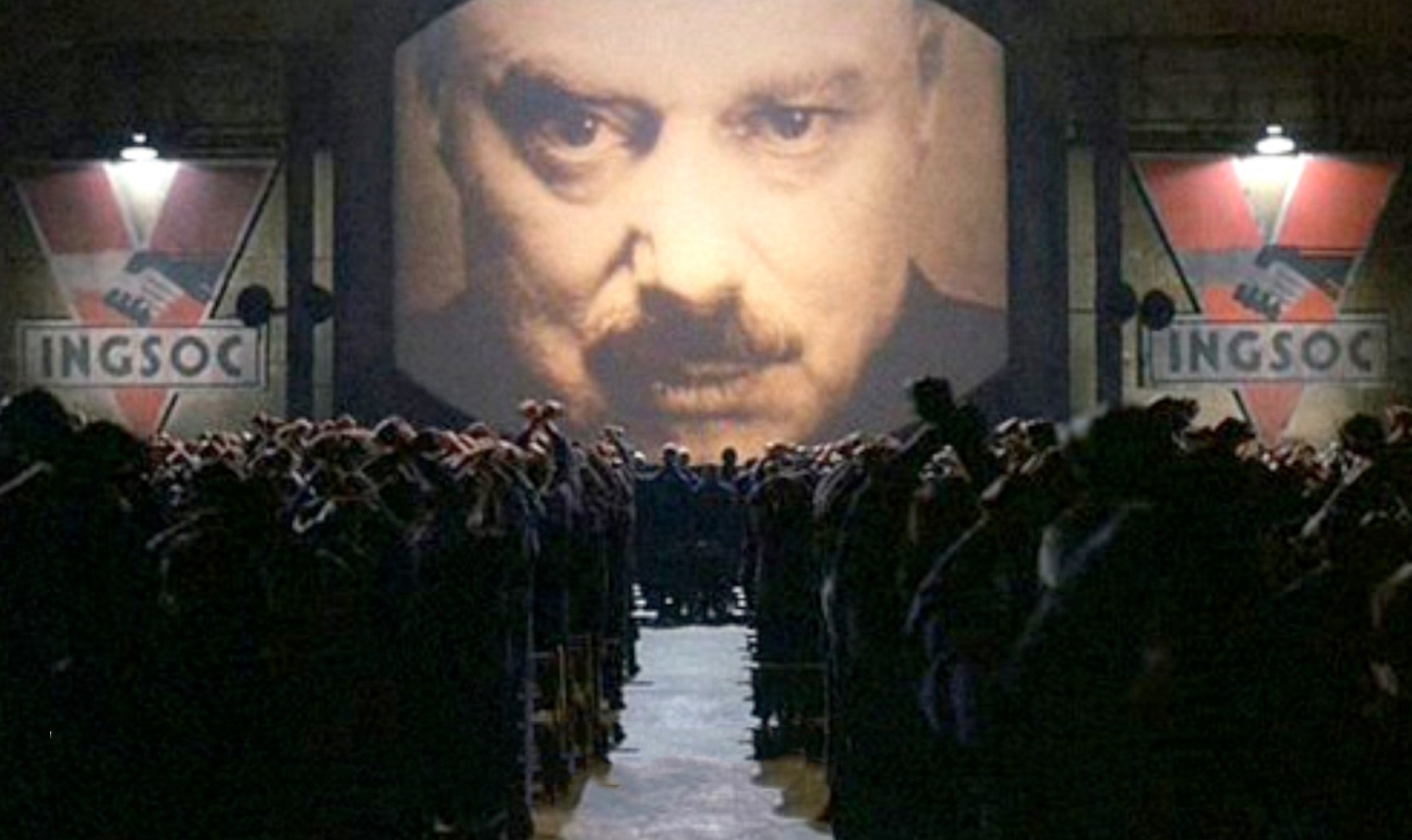
Zamyatin’s hero D-503 seemed quite pleased with his personal dystopia.
Jean-Jacques Rousseau’s 1762 work The Social Contract is in many respects an answer to his earlier work on inequality from 1754. In his discourse on inequality, he elaborated on the concept of amour propre, from which all inequality derived. This amounted to a kind of egotism, or self-love of a particular kind, not what he calls amour de soi-meme, or love of oneself, which is a more visceral, base, defensiveness or protectiveness. The amour de soi-meme is a natural basis for self-preservation, much one could say as the spikes on a porcupine represent that animal’s amour de soi-meme. The amour propre is the basis, he says, for honour, deriving as it does from a sense of esteem, something that is relative (to other people) and created by society. Hobbesian vainglory, Platonic thumos, Freudian egoism, even Nietzschian supremacism – there are other incarnations of this concept, and in responding as he did in the Social Contract to this particularly human (and male) characteristic in The Social Contract, Rousseau extended the concept in The General Will. Continue reading “The General Will And Predictive Analytics”→
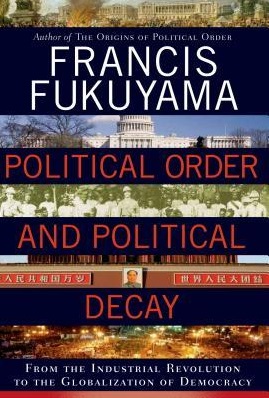
Towards the end of Fancis Fukyama’s recent tome, Political Order and Political Decay, Fukuyama makes reference to Frederick Winslow Taylor, a business guru from the turn of the century. Modern Science was being applied to state bureaucracy, and Taylor was at the forefront of what might be termed today as business optimization. ‘[A]dministration,’ Fukuyama explained, ‘was a realm of implementation that could be studied empirically and subjected to scientific analysis….public administration could be turned into a science and protected from the irrationalities of politics.’ (Chapter 41, Political Decay) Reading that piece, I remembered something.
Yevgeny Zamyatin was a writer who George Orwell described as having an ‘intuitive grasp of the irrational side of totalitarianism.’ His best remembered work “We” is a dark satire on a future state that is authoritatian, vicious, mathematical, and strangely devoid of character and soul. On numerous occasions his narrator refers to Taylor (who died only six years prior to the publication of the book), referring to him as ‘the greatest of the ancients’, an asignation dripping with satire. His methods appear in Zamtayin’s dystopia as cherished principles of the One State regime, moving towards mathematical perfection in the administration of society. Clearly, Zamyatin saw what Fukuyama saw, and while Fukuyama acts as a historian and reports the trend dispassionately, Zamyatin as a contemporary of Taylor clearly saw ‘Scientific Management’ as a dangerous thing.
The Scottish Independence vote on September 18th will decide whether the country secedes from the United Kingdom. Its impact on the UK will be significant, as are the ramifications across Europe for separatist regions like Catalonia in Spain, Flanders in Belgium, and Kurdistan in Southern Turkey / Northern Iraq. Separatism – Nationalism – is back in vogue.
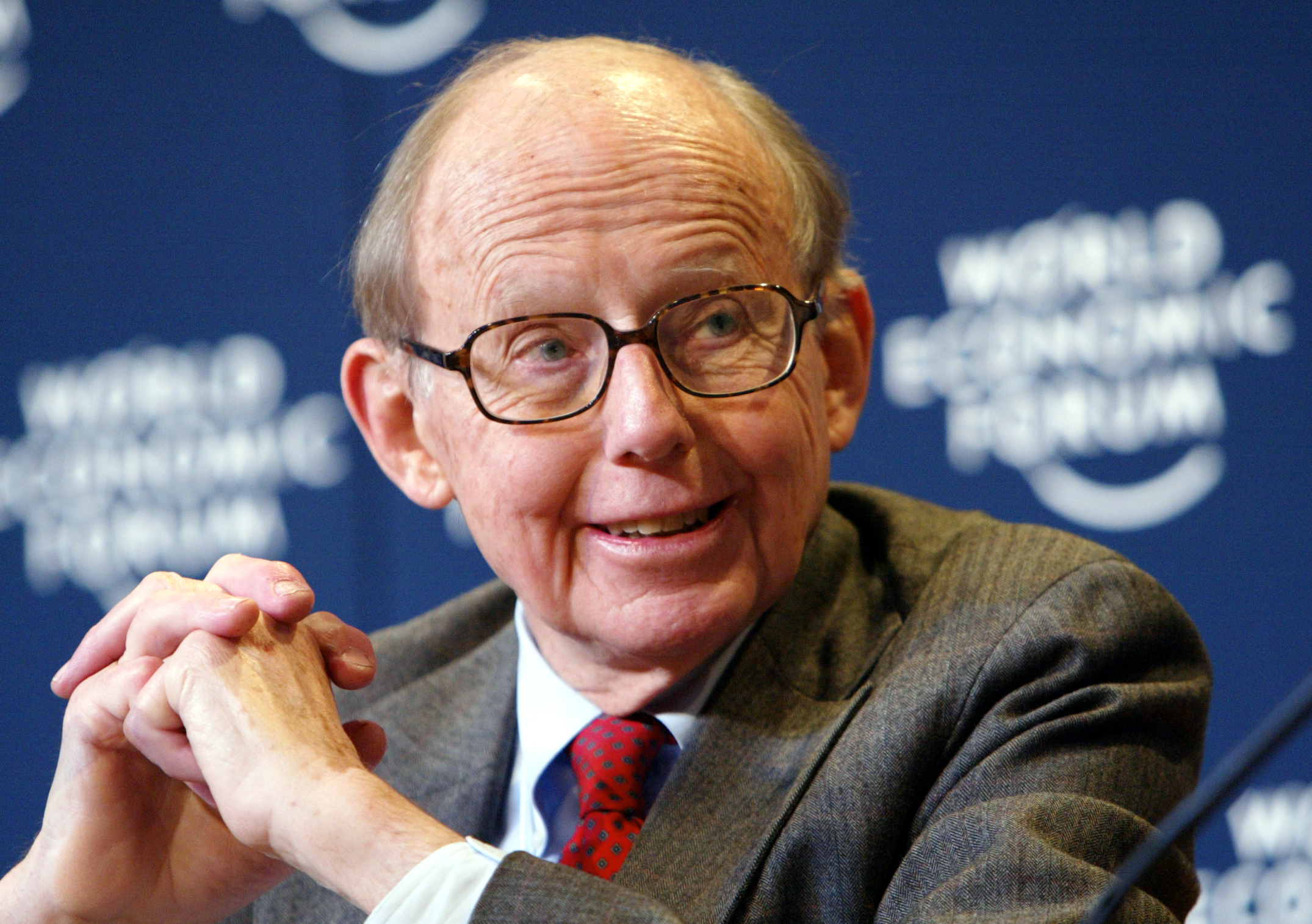
Samuel Huntingdon: argued that Nation States would remain the most powerful actors in world affairs. Was he right?
Nationalism, and National Identity, have long been a passion of mine. But whatever of its role in defining personal and community identity, as a structure it is in flux. The concept of the nation state in many ways defined the history of the twentieth century: in the lead up to World War I, the subsequent establishment of the League of Nations and various boundary commissions, then World War II and its various alliances, and the establishment of the United Nations, the European Union and the retrenchment from Empire, establishing so many new nation states all over Africa and Asia in particular. The Nation was sovereign, and inviolable; what happened within the State was solely the preserve of the State, and no other State would intervene in matters domestic (until Kosovo, and after Rwanda).
So let’s say the State becomes a platform, like we talked about in the last post. In order to participate in the State, in order to pay taxes, and get educational accreditation, access healthcare, and to get licensed to own dogs, own a gun, or drive a car, you need to subscribe to the platform. Let’s say then that the platform allows for commercial entities to participate, to advertise their wares on the State Platform, to ‘compete’ for consumer attention based on big data analysis of citizen behaviour and experience. What are the other things that are happening with technology that impact upon the evolution of the state?
Here at StateLegitimacy.com, we’re interested in two things. First, how we measure legitimacy, and how legitimacy is constructed, and second, how technology impacts on legitimacy. We’re going to ask the question: could Rousseau’s Social Contract be implemented in technology? What if the state became a platform?
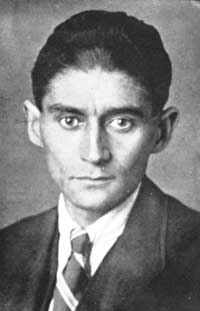
Capital: a Creature of Bureaucracy and Law. Kafka would be pleased.
We mentioned in the last post a scenario where capital transcended human ownership, and became – through law – an entity in and of itself, lording it over mere humans. It sounds far-fetched, but is it? The discourse on inequality is about wealth accumulation of a small number of people, but it is essentially a discussion about the centralization of capital, where fewer and fewer people control that capital. Now, as the number of people controlling the capital decreases, the question arises: what happens if it gets down to two people, or one person, controlling the preponderance of capital? There are political answers to this, and social answers, but – for now – let’s consider the financial side.
In the West, Capital is generated primarily through the corporate-legal structures of western liberal democracy. In essence, companies produce goods and services, and accumulate assets and profits. They grow through acquisitions – other assets – and increase profitability. However, most companies are moving now towards virtualized infrastructures. What that means is that companies own less and less of their own assets, and become, essentially, capital generators, rather than capital owners. Let’s take a hypothetical example… Continue reading “Virtualized Capital: Kafka meets Piketty”→





 irrational side of totalitarianism.’ His best remembered work


 State Legitimacy