Author: anthonybehan

Researching state legitimacy, AI, identity, critical theory, and how technology changes personal identity and the nation state. One wife, three dogs, six guitars, and a seldom used trombone. Work for IBM but this is completely independent of that.

What is a Nation?

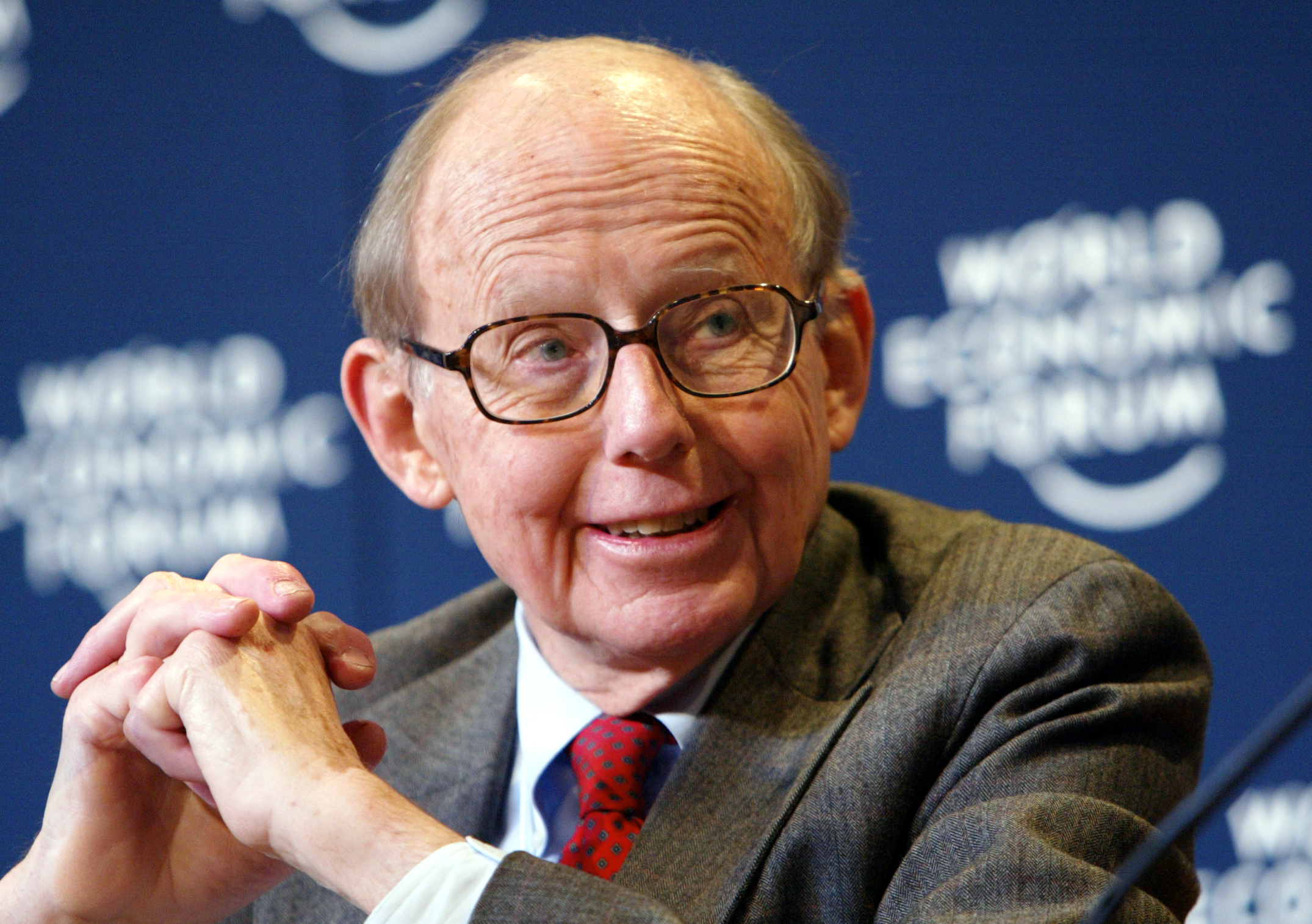
Samuel P. Huntington - World Economic Forum Annual Meeting Davos 2008
Samuel Huntingdon: argued that Nation States would remain the most powerful actors in world affairs. Was he right?

Nationalism, and National Identity, have long been a passion of mine.  But whatever of its role in defining personal and community identity, as a structure it is in flux.  The concept of the nation state in many ways defined the history of the twentieth century: in the lead up to World War I, the subsequent establishment of the League of Nations and various boundary commissions, then World War II and its various alliances, and the establishment of the United Nations, the European Union and the retrenchment from Empire, establishing so many new nation states all over Africa and Asia in particular. The Nation was sovereign, and inviolable; what happened within the State was solely the preserve of the State, and no other State would intervene in matters domestic (until Kosovo, and after Rwanda).

Continue reading “What is a Nation?”

Platform, Identity, Capital, Regulation: The New State

Stuart Hall, who died earlier this year

So let’s say the State becomes a platform, like we talked about in the last post.  In order to participate in the State, in order to pay taxes, and get educational accreditation, access healthcare, and to get licensed to own dogs, own a gun, or drive a car, you need to subscribe to the platform.  Let’s say then that the platform allows for commercial entities to participate, to advertise their wares on the State Platform, to ‘compete’ for consumer attention based on big data analysis of citizen behaviour and experience.  What are the other things that are happening with technology that impact upon the evolution of the state?

Continue reading “Platform, Identity, Capital, Regulation: The New State”

The Platformification of The State

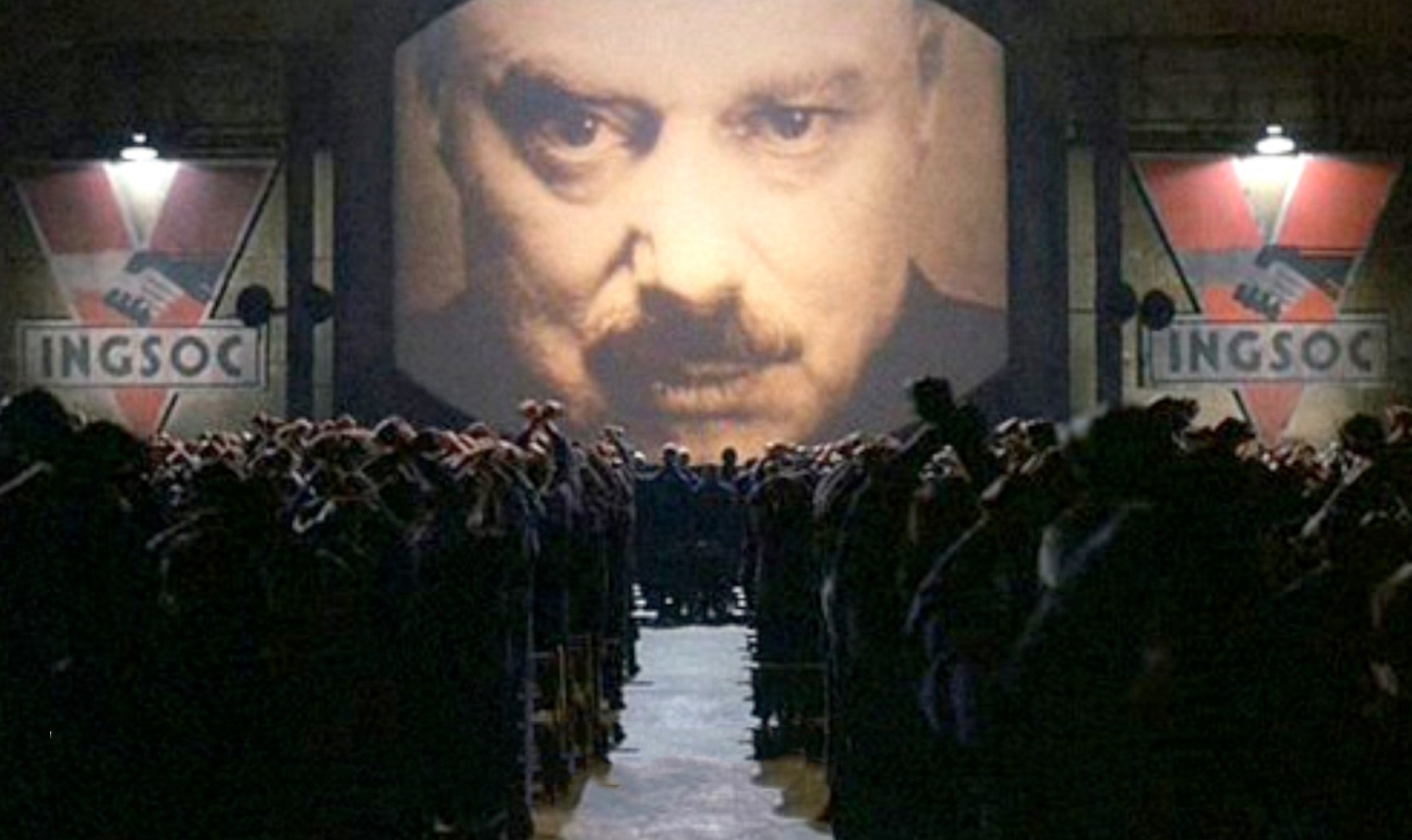
big-brother-1984
Well, there is that.

Here at StateLegitimacy.com, we’re interested in two things. First, how we measure legitimacy, and how legitimacy is constructed, and second, how technology impacts on legitimacy. We’re going to ask the question: could Rousseau’s Social Contract be implemented in technology?  What if the state became a platform?

Continue reading “The Platformification of The State”

Virtualized Capital: Kafka meets Piketty

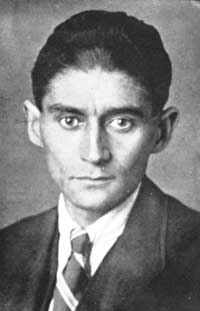
Capital: a Creature of Bureaucracy and Law. Kafka would be pleased.

We mentioned in the last post a scenario where capital transcended human ownership, and became – through law – an entity in and of itself, lording it over mere humans.  It sounds far-fetched, but is it? The discourse on inequality is about wealth accumulation of a small number of people, but it is essentially a discussion about the centralization of capital, where fewer and fewer people control that capital. Now, as the number of people controlling the capital decreases, the question arises: what happens if it gets down to two people, or one person, controlling the preponderance of capital?  There are political answers to this, and social answers, but – for now – let’s consider the financial side.

In the West, Capital is generated primarily through the corporate-legal structures of western liberal democracy.  In essence, companies produce goods and services, and accumulate assets and profits.  They grow through acquisitions – other assets – and increase profitability.  However, most companies are moving now towards virtualized infrastructures.  What that means is that companies own less and less of their own assets, and become, essentially, capital generators, rather than capital owners. Let’s take a hypothetical example… Continue reading “Virtualized Capital: Kafka meets Piketty”

Capitalism, Meritoctatic Democracy, and Legitimacy


Piketty (top) and Reich have both taken on the subject of Inequality

Piketty on Capital and Reich on Inequality are both essentially saying the same thing, that inequality is structurally bad, and growing. (We can revisit posts on social mobility and the inevitability of capitalist collapse to understand some of the ways in which this manifests itself.)  In essence, Piketty – and Reich – argue that capital will continue to accrue to fewer and fewer people.  There is a possible alternative, extended, dystopian view that suggests that capital – through the corporation – actually transcends human ownership entirely and become a virtualized entity in and of itself, a creature of law, that exists to perpetuate itself and grow.  Therefore, in essence, capital exists to extract wealth from people, and rather than realising an objective of ‘raising all boats’, it actually pushes all boats into the water to the point of sinking, though not quite. For to sink those boats would be to undermine the source of wealth itself, and the essence of capital growth, which capital needs to survive.

Continue reading “Capitalism, Meritoctatic Democracy, and Legitimacy”

Syria, Now

kerry, brahimi
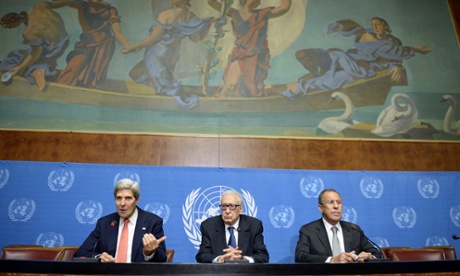
Tough Job: US Secretary of State John Kerry next to United Nations-Arab League special envoy for Syria Lakhdar Brahimi and Russian Foreign minister Sergei Lavrov.

Twelve months ago it seemed inevitable that Bashar Al-Assad had no future in Syria, that it was merely a matter of time before his reign – and his dynasty – came to an end.  What has been consistent also, however, is that there has been no clarity in terms of who should replace him.  Furthermore, this has never been an internalised, isolated civil war; it is regional, strategic, and symbolic. Continue reading “Syria, Now”

British Exceptionalism and the New Isolationism

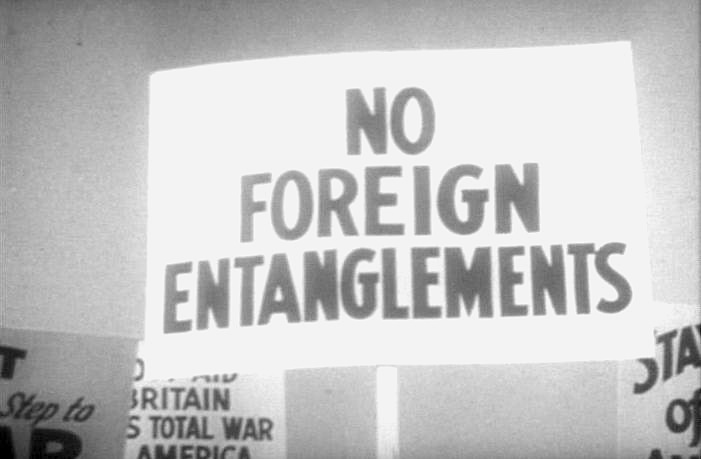
isolationismIn the early part of the twentieth century, Woodrow Wilson‘s America decided upon an Isolationist Foreign Policy concentrating their efforts on the battles at home. It wasn’t a new strategy – since the days of George Washington, the country as it emerged tried to distance itself from foreign entanglements, notwithstanding repeated encroachment on its borders by regional competitors and the death throes of European Power. The German ascendancy in the Atlantic finally forced their hand, and in order to protect the interests of America the country was forced into the war, and away from its isolationism. America, it appeared, could only advance her domestic interests if actively engaged on the International Stage.

Continue reading “British Exceptionalism and the New Isolationism”

Inequality and The Demise of the Euro

euro-meltdown
This is not going well.

The coalition negotiations in Germany appear to have stalled on the question of whether Chancellor Merkel will authorize further European capital (read: German capital) for Irish banks.  Further more, the SDP is trying to force Ireland to raise its corporation tax rate, an incentive that has diverted investments away from the rest of Europe in key areas such as the Internet and Biotechnology.  This is not the first time that Germany has taken on the appearance of a reluctant bully in Europe, forcing itself on the weaker nations who are not deserving of its largesse.  It is of course symptom, not cause, and the true reason for the current difficulties – perpetuated now for five years or so – is the structural failure of the European project to manage economic diversity.

There is some great wealth in Europe, concentrated in pockets such as the Ruhr valley, Northern Italy, Southern England, and other places.  Big industries such as auto manufacturing and pharmaceuticals employ hundreds of thousands, while financial services help to facilitate the trade of those products all over the world.  The wealth, however, is poorly distributed if we consider the wider context.

Continue reading “Inequality and The Demise of the Euro”

MoD study sets out how to sell wars to the public

Interesting pickup in the Guardian yesterday on how the British defense mandarins plan to ‘sell’ war. It’s not as easy as a hashtag…

http://gu.com/p/3j4ze