



Capitalism, Meritoctatic Democracy, and Legitimacy


Piketty (top) and Reich have both taken on the subject of Inequality

Piketty on Capital and Reich on Inequality are both essentially saying the same thing, that inequality is structurally bad, and growing. (We can revisit posts on social mobility and the inevitability of capitalist collapse to understand some of the ways in which this manifests itself.)  In essence, Piketty – and Reich – argue that capital will continue to accrue to fewer and fewer people.  There is a possible alternative, extended, dystopian view that suggests that capital – through the corporation – actually transcends human ownership entirely and become a virtualized entity in and of itself, a creature of law, that exists to perpetuate itself and grow.  Therefore, in essence, capital exists to extract wealth from people, and rather than realising an objective of ‘raising all boats’, it actually pushes all boats into the water to the point of sinking, though not quite. For to sink those boats would be to undermine the source of wealth itself, and the essence of capital growth, which capital needs to survive.

Continue reading “Capitalism, Meritoctatic Democracy, and Legitimacy”
Syria, Now

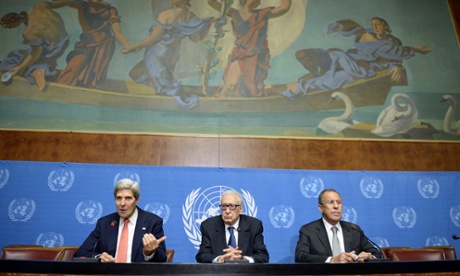
kerry, brahimi
Tough Job: US Secretary of State John Kerry next to United Nations-Arab League special envoy for Syria Lakhdar Brahimi and Russian Foreign minister Sergei Lavrov.

Twelve months ago it seemed inevitable that Bashar Al-Assad had no future in Syria, that it was merely a matter of time before his reign – and his dynasty – came to an end.  What has been consistent also, however, is that there has been no clarity in terms of who should replace him.  Furthermore, this has never been an internalised, isolated civil war; it is regional, strategic, and symbolic. Continue reading “Syria, Now”

British Exceptionalism and the New Isolationism

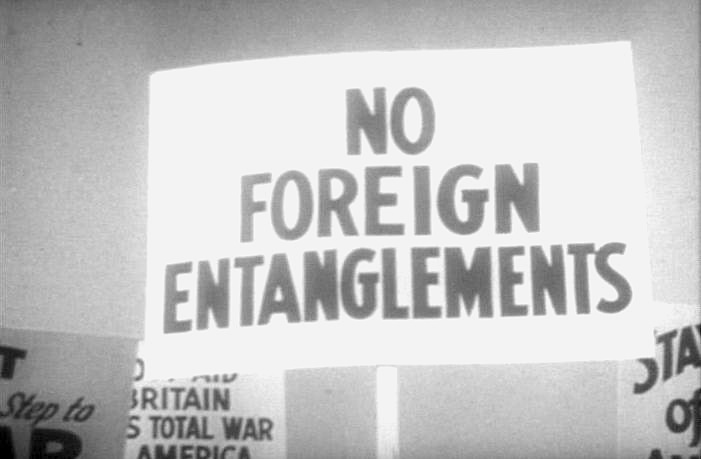
isolationismIn the early part of the twentieth century, Woodrow Wilson‘s America decided upon an Isolationist Foreign Policy concentrating their efforts on the battles at home. It wasn’t a new strategy – since the days of George Washington, the country as it emerged tried to distance itself from foreign entanglements, notwithstanding repeated encroachment on its borders by regional competitors and the death throes of European Power. The German ascendancy in the Atlantic finally forced their hand, and in order to protect the interests of America the country was forced into the war, and away from its isolationism. America, it appeared, could only advance her domestic interests if actively engaged on the International Stage.

Continue reading “British Exceptionalism and the New Isolationism”

Inequality and The Demise of the Euro

euro-meltdown
This is not going well.

The coalition negotiations in Germany appear to have stalled on the question of whether Chancellor Merkel will authorize further European capital (read: German capital) for Irish banks.  Further more, the SDP is trying to force Ireland to raise its corporation tax rate, an incentive that has diverted investments away from the rest of Europe in key areas such as the Internet and Biotechnology.  This is not the first time that Germany has taken on the appearance of a reluctant bully in Europe, forcing itself on the weaker nations who are not deserving of its largesse.  It is of course symptom, not cause, and the true reason for the current difficulties – perpetuated now for five years or so – is the structural failure of the European project to manage economic diversity.

There is some great wealth in Europe, concentrated in pockets such as the Ruhr valley, Northern Italy, Southern England, and other places.  Big industries such as auto manufacturing and pharmaceuticals employ hundreds of thousands, while financial services help to facilitate the trade of those products all over the world.  The wealth, however, is poorly distributed if we consider the wider context.

Continue reading “Inequality and The Demise of the Euro”

MoD study sets out how to sell wars to the public

Interesting pickup in the Guardian yesterday on how the British defense mandarins plan to ‘sell’ war. It’s not as easy as a hashtag…

http://gu.com/p/3j4ze

Drones and American Identity

Foreign Affairs Death from AboveDan Byman’s defence of drones in Foreign Affairs (July / August 2013) sets out the case for drones, a highly effective, low risk method of taking out terrorists.  The changed nature of terrorism, with its globalised, stateless, and highly distributed character certainly presents significant challenges to the defence of the realm.  There are advantages over conventional military options – air strikes, ‘boots on the ground’, covert operations – and, in particular, the speed with which weaponised drones can be deployed makes them far more flexible tools for the military.  The politics, Byman adds, can be tricky, but most governments within drone strike domains are tacitly acquiescent.

If the objective of the exercise is to defeat terrorism, or, rather, the immediate threat of terrorism, then Byman is right – drones are extremely effective.  However, he is wrong in not addressing whether they advance the long term strategic interests of the United States. He limits his discussion on this to the prospect that drones create more terrorists in people whose families are killed or injured, perpetuating the hatred that turns people against America.  The problems are deeper than that – and impact the core of who and what America is.

Continue reading “Drones and American Identity”

Enemies of Legitimacy: Voter Apathy and External Interference

platon_putin1_width_600x
Russian President Vladimir Putin: Asserting Himself

The Syrian Crisis continues to dominate international news this week, as poorly executed Washington diplomacy prolongs the affair, and Assad and Putin teach them a lesson in media management.  The breathtaking hypocrisy in Putin’s defense of International Law (hopefully the New York Times doesn’t syndicate to Georgia) is matched only by Obama and Kerry in their grand pronouncements on human rights violations in the Middle East. If the weariness of the double standards in International Politics was insufficient to shake one’s faith in the State system, then perhaps we might take some time to think about the sustainability of institutions whose legitimacy is being persistently assaulted from within and without.

Continue reading “Enemies of Legitimacy: Voter Apathy and External Interference”

National Security and the Legitimacy of the State

Edward Snowdon
Edward Snowdon: His revelations (though not new) have launched an avalanche of introspection and head scratching.

The New York Times and the Guardian have been digging ever deeper into the activities of the US National Security Agency or NSA following the leaking by Edward Snowdon of information about how they were spying both on countries and ordinary people at home.  Hot on the heels of the Chelsea Manning and Wikileaks diplomatic cables episode, there has been a constant flow of stories reporting on nefarious activities of spooks and governments, embarrassing opinions, and the mechanisms by which international diplomacy and spying are conducted, though Wired Magazine had got there first.   There are numerous angles to all of this.  There is the technology problem, an Orwellian, Kurtzweilian post-humanist dystopia where technology trumps all, and big data and analytics undermines or redefines the essence of who we are and forces a kind of a re-evaluation of existence.  There is the human rights problem, the balancing of the right to privacy and – generally speaking – an avoidance of judgement of the individual by the state, with the obligation to secure the state.  This issue is complex – if for example we have an ability to know, to predict, to foretell that people are going to do bad things, but we choose not to do that because it would require predicting also which people were going to do not-bad things, and therefore invade their privacy, is that wrong?  Many people said after 9/11 ‘why didn’t we see this coming?’ Which leads to the question – if you could know all that was coming, would you want to know?

Continue reading “National Security and the Legitimacy of the State”

The Syrian Complex

Syria's borders are all fraught
Syria’s borders are all fraught

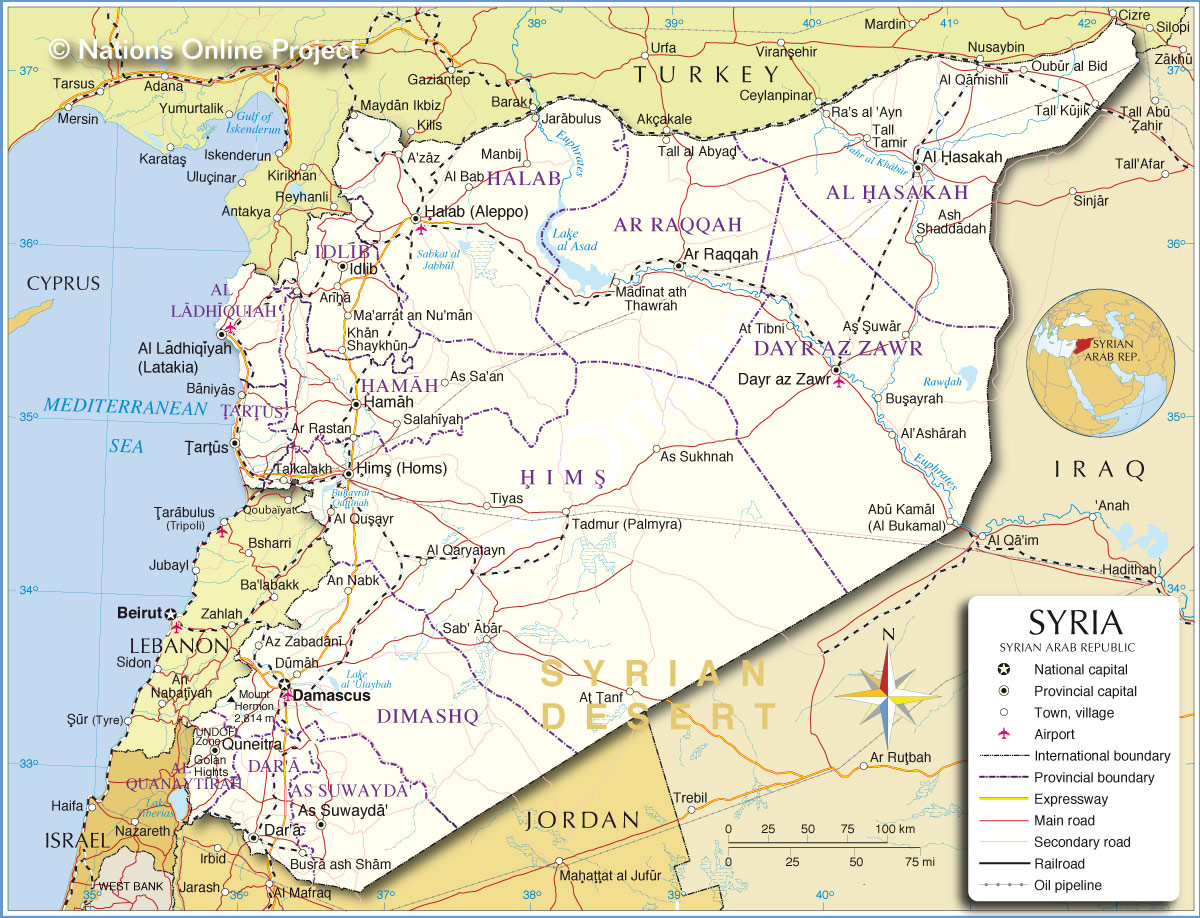
Six months ago, it appeared obvious that Bashar Al-Assad was on his way out of Syria.  What was less clear, however, was who was likely to succeed him. And it is this particular point – the absence of a clear opposition – that has kept him in place. The various countries that have an interest are both local and global, and the rationale of each bears thinking about.

Let’s start with the neighbours.  Immediately surrounding Syria are Turkey, Iraq, Jordan, Lebanon and Israel.  Hizbollah – and therefore Lebanon – is supporting Assad, primarily one suspects because they think he will win. Syria has long been a friend of the Palestinians.  Assad himself put it thus in 2002: “As far as an occupier is concerned, there is no distinction between soldiers and civilians… There is a distinction between armed and unarmed, but in Israel everyone is armed. In any case, we adopted the following concept: resistance to occupation is a legitimate right.”

Continue reading “The Syrian Complex”